

Pharmacology - Mar 19
GSK, University of Oxford and Imperial College London launch centre to create computer models of lungs, liver, kidneys and cartilage
GSK, University of Oxford and Imperial College London launch centre to create computer models of lungs, liver, kidneys and cartilage
Innovation - Mar 19
India's new wave of Hindu Religious Entrepreneurship is reshaping our interpretation of success
India's new wave of Hindu Religious Entrepreneurship is reshaping our interpretation of success

Veterinary - Mar 19
New RVC study challenges common beliefs on desirable behaviours in designer 'Doodle' crossbreeds
New RVC study challenges common beliefs on desirable behaviours in designer 'Doodle' crossbreeds
Agronomy & Food Science - Mar 19
Bird Flu Risk to Danish Cattle - New Tool Can Warn Farmers Before Infection Spreads
Bird Flu Risk to Danish Cattle - New Tool Can Warn Farmers Before Infection Spreads
Chemistry - Mar 19
Leipzig University and Center for the Transformation of Chemistry conclude collaboration agreement
Leipzig University and Center for the Transformation of Chemistry conclude collaboration agreement
Psychology - Mar 19
Analysis: Trying your best in a second language? Here's why native speakers seem so rude
Analysis: Trying your best in a second language? Here's why native speakers seem so rude
Computer Science - Mar 18
SDU is part of global initiative to bring mathematical certainty to modern computing and artificial intelligence
SDU is part of global initiative to bring mathematical certainty to modern computing and artificial intelligence
news
Swiss Federal Institute of Technology Lausanne, EPFL
Results 1081 - 1100 of 1375.
Music - Computer Science - 06.07.2017
Artificial musician builds new melodies without music theory
A deep-learning algorithm developed by EPFL scientists can generate melodies that imitate a given style of music.
Innovation - 30.06.2017

Researchers from EPFL and UNIL have developed an encryption protocol that can put drivers in touch with passengers while keeping their personal data secret.
Life Sciences - Health - 26.06.2017
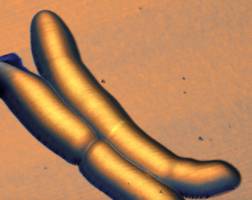
EPFL scientists show how some pathogenic bacteria - such as the mycobacteria that cause tuberculosis - use a previously unknown mechanism to coordinate their division. The discovery could help develop new ways to fight them. Most rod-shaped bacteria divide by splitting into two around the middle after their DNA has replicated safely and segregated to opposite ends of the cell.
Physics - Electroengineering - 23.06.2017
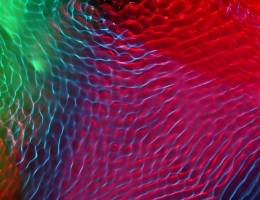
EPFL researchers have found a way around what was considered a fundamental limitation of physics for over 100 years. They were able to conceive resonant systems that can store electromagnetic waves over a long period of time while maintaining a broad bandwidth. At EPFL, researchers challenge a fundamental law and discover that more electromagnetic energy can be stored in wave-guiding systems than previously thought.
Environment - 09.06.2017
Alpine streams produce more CO2 after a warm winter
An EPFL study has for the first time measured the impact of climate change on alpine streams, and the results are quite worrying: after a low-snow winter, these streams release more carbon dioxide than they absorb. Numerous researchers are looking at the impact of climate change on the Alps. And one of the most obvious effects is the low snowfall observed in recent years.
Physics - Innovation - 08.06.2017

Researchers from EPFL and Karlsruhe Institute of Technologyâ?use a soliton frequency combs from optical microresonators to transmit data at speeds of more than 50 terabits per second.
Health - Life Sciences - 06.06.2017
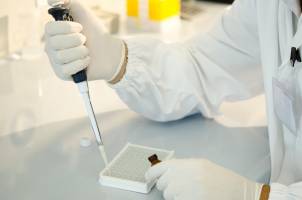
EPFL researchers propose a new approach of performing in vitro tests on nanoparticles that could enhance a correlation to in vivo results. This involves reproducing in the lab the dynamic and fluidic variations that these particles experience in the human body. Before new nanoparticles or other nanomedicines can be injected into the human body, a whole series of tests must be conducted in the laboratory, then in living cells, and in the end on humans.
Chemistry - Environment - 05.06.2017
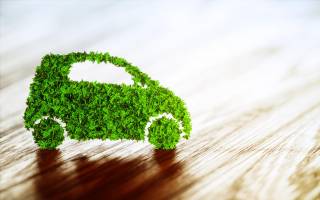
EPFL scientists have built the first Earth-abundant and low-cost catalytic system for splitting CO2into CO and oxygen, an important step towards achieving the conversion of renewable energy into hydrocarbon fuels.
Architecture & Buildings - Environment - 03.06.2017

EPFL, in association with the School of Engineering and Architecture of Fribourg, the Geneva School of Art and Design and the University of Fribourg, is taking part in the 2017 international Solar Decathlon competition.
Environment - Materials Science - 01.06.2017

EPFL scientists have built a low-cost and ultra-stable perovskite solar cell that has been running at 11.2% efficiency for over a year, without loss in performance.
Environment - Physics - 31.05.2017
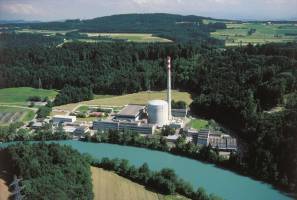
Mühleberg is the first Swiss nuclear power plant slated for decommissioning in 2019. EPFL researchers have shown that its shutdown will lower water temperatures in the Aar River and Lake Biel, and could affect waterways as far away as Germany. When the Mühleberg nuclear power station goes offline in 2019, the waters of the Aar River and Lake Biel will cool down.
Computer Science - 29.05.2017

An EPFL researcher has created a system that scans Wikipedia for important articles that are missing in other languages. This project could help expand the online encyclopedia's coverage in minority languages, such as Romansh. With 40 million articles in 293 languages, Wikipedia is the largest encyclopedia ever made.
Physics - Chemistry - 24.05.2017
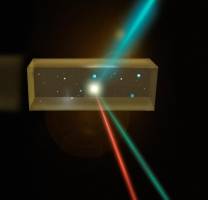
Researchers from EPFL have shown that the surface of minuscule water drops with a 100 nm size is surprisingly ordered. At room temperature, the surface water molecules of these droplets have much stronger interactions than a normal water surface. The structural difference corresponds to a difference in temperature of -50 °C, which may shed new light on a variety of atmospheric, biological and even geological processes.
Mathematics - Chemistry - 23.05.2017
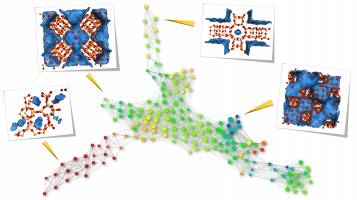
EPFL scientists have developed a mathematical 'face-recognition' method for identifying and discovering nanoporous materials based on their pore size. Image: Topological differences of top-performing materials for methane storage. Topological data analysis reveals the similarity between structures; each node represents a family of similar materials, while a network between two nodes indicates that they share at least one material.
Astronomy & Space - 19.05.2017

This past week, 28 CubeSats were released from the International Space Station (ISS). Eight of them are running EPFL software that was originally developed for SwissCube.
Astronomy & Space - Physics - 19.05.2017
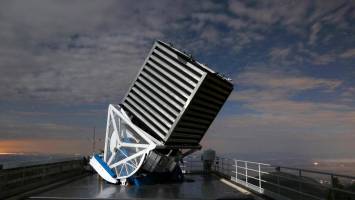
Astronomers of the extended Baryonic Oscillation Spectroscopic Survey, led by EPFL Professor Jean-Paul Kneib, used the Sloan telescope to create the first map of the Universe based entirely on quasars. Quasars are incredibly bright and distant points of light powered by supermassive black holes. As matter and energy fall into the black hole, they heat up to incredible temperatures and begin to glow with excessive brightness.
Environment - Life Sciences - 18.05.2017

EPFL researchers have created an online platform for monitoring the genetic diversity of livestock and the sustainability of animal farming in Switzerland. This project, which was developed in partnership with the Federal Office for Agriculture, could serve as a model for other countries. "With the GenMon platform, our aim was to develop a practical tool for automating the process of monitoring livestock in Switzerland," explains Solange Duruz, a PhD student in the Laboratory of Geographic Information Systems (LASIG) and lead author of the article, which appeared in the journal PLOS One .
Pharmacology - Health - 16.05.2017
Antibody biosensor offers unlimited point-of-care drug monitoring
A team of EPFL scientists has developed several antibody-based biosensors that have the potential to help healthcare centers in developing countries or even patients in their own homes keep track of drug concentration in the blood. Being able to monitor drug concentration in the blood of a patient is an important aspect of any pharmaceutical treatment.
Environment - Life Sciences - 16.05.2017

Coral reefs in the Red Sea's Gulf of Aqaba can resist rising water temperatures. If they survive local pollution, these corals may one day be used to re-seed parts of the world where reefs are dying.
Physics - Electroengineering - 15.05.2017
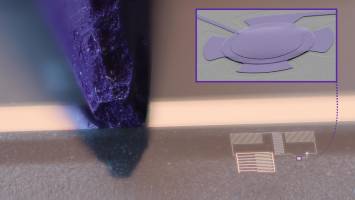
EPFL researchers use a mechanical micrometer-size drum cooled close to the quantum ground state to amplify microwaves in a superconducting circuit. Image: Photograph of the chip used in the experiment to couple a microwave cavity to a micrometer-size drum (the sharp purple pencil tip is placed as a scale).


Pharmacology - Mar 19
GSK, University of Oxford and Imperial College London launch centre to create computer models of lungs, liver, kidneys and cartilage
GSK, University of Oxford and Imperial College London launch centre to create computer models of lungs, liver, kidneys and cartilage
Innovation - Mar 19
India's new wave of Hindu Religious Entrepreneurship is reshaping our interpretation of success
India's new wave of Hindu Religious Entrepreneurship is reshaping our interpretation of success
Veterinary - Mar 19
New RVC study challenges common beliefs on desirable behaviours in designer 'Doodle' crossbreeds
New RVC study challenges common beliefs on desirable behaviours in designer 'Doodle' crossbreeds
Agronomy & Food Science - Mar 19
Bird Flu Risk to Danish Cattle - New Tool Can Warn Farmers Before Infection Spreads
Bird Flu Risk to Danish Cattle - New Tool Can Warn Farmers Before Infection Spreads
Chemistry - Mar 19
Leipzig University and Center for the Transformation of Chemistry conclude collaboration agreement
Leipzig University and Center for the Transformation of Chemistry conclude collaboration agreement
Psychology - Mar 19
Analysis: Trying your best in a second language? Here's why native speakers seem so rude
Analysis: Trying your best in a second language? Here's why native speakers seem so rude
Computer Science - Mar 18
SDU is part of global initiative to bring mathematical certainty to modern computing and artificial intelligence
SDU is part of global initiative to bring mathematical certainty to modern computing and artificial intelligence