

Environment - Mar 26
Changing vegetation in thawing permafrost increases emissions of greenhouse gases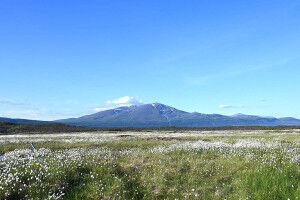
Changing vegetation in thawing permafrost increases emissions of greenhouse gases
Environment - Mar 26
University of Manchester hits major sustainability milestone, with Main Campus becoming 100% 'Zero Landfill'
University of Manchester hits major sustainability milestone, with Main Campus becoming 100% 'Zero Landfill'
Social Sciences - Mar 26
"It would be naive to believe that a social media ban will solve all problems"
"It would be naive to believe that a social media ban will solve all problems"


Health - Mar 26
Earlier detection, better outcomes: Irish researchers target rising bowel cancer rates with new blood test
Earlier detection, better outcomes: Irish researchers target rising bowel cancer rates with new blood test

Environment - Mar 26
UK must improve energy efficiency to end 50 years of policy failure and prevent future energy crises, study argues
UK must improve energy efficiency to end 50 years of policy failure and prevent future energy crises, study argues
Mathematics - Mar 26
From Materials to Medical Imaging, Fonseca's Work Shapes the Future of Innovation
From Materials to Medical Imaging, Fonseca's Work Shapes the Future of Innovation
Health - Mar 26
MedUni Vienna shows: By using their own voices, trainee doctors learn to better understand transgender perspectives
MedUni Vienna shows: By using their own voices, trainee doctors learn to better understand transgender perspectives


news
University of Münster
Results 261 - 280 of 299.
Life Sciences - Computer Science - 08.05.2019
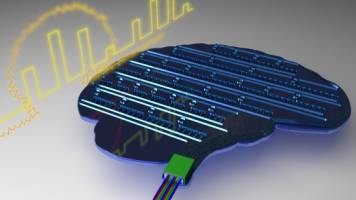
New light-based hardware which can store and process information in a similar way to the human brain / Study published in "Nature" journal A technology that functions like a brain? In these times of artificial intelligence, this no longer seems so far-fetched - for example, when a mobile phone can recognise faces or languages.
Life Sciences - Physics - 07.05.2019
Trigger for directed cell motion
When an individual cell is placed on a level surface, it does not keep still, but starts moving. This phenomenon was observed by the British cell biologist Michael Abercrombie as long ago as 1967. Since then, researchers have been thriving to understand how cells accomplish this feat. This much is known: cells form so-called lamellipodia - cellular protrusions that continuously grow and contract - to propel themselves towards signalling cues such as chemical attractants produced and secreted by other cells.
Physics - Astronomy & Space - 24.04.2019
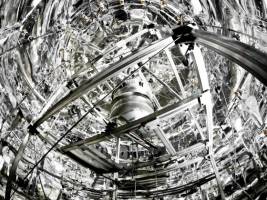
The universe is almost 14 billion years old. An inconceivable length of time by human standards - yet compared to some physical processes, it is but a moment. There are radioactive nuclei that decay on much longer time scales. An international team of scientists has now directly measured the rarest decay process ever recorded in a detector.
Earth Sciences - Paleontology - 24.04.2019
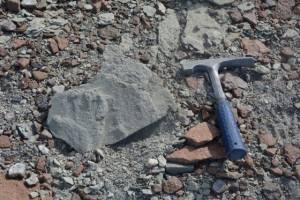
Around three years ago, researchers on an Antarctic expedition, including Münster University palaeobotanist Dr. Benjamin Bomfleur , made an incredible discovery in northern Victoria Land. They found the 200 million-year-old footprint of an extinct reptile. The researchers have now published their findings from the hand-sized footprint in the journal "Polar Research".
Materials Science - 23.04.2019
Influence of the cathode on the lithium metal anode
The demand for high-energy batteries, in particular for the automotive industry, is increasing, and with it the research interest in battery technologies, which could determine the future market. A promising technology are secondary lithium metal batteries (LMBs), which combine lithium metal as an anode with, for example, cathode materials containing lithium ions.
Life Sciences - Pharmacology - 04.04.2019
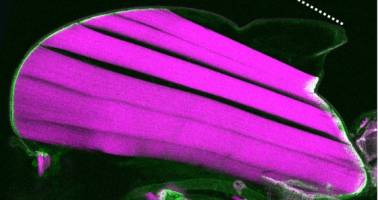
Muscles are connected to tendons to power animal movements such as running, swimming or flying. Forces are produced by contractile chains of the proteins actin and myosin, which are pulling on muscle-tendon connections called attachments. During animal development, these muscle-tendon attachments must be established such that they resist high mechanical forces for the entire life of the animal.
Religions - History & Archeology - 27.03.2019

The voice is a fleeting medium. As the primary means of human communication, it also plays an important role in religion. And yet it is difficult to grasp and seems to elude discussion. But a research project at the Cluster of Excellence has nonetheless approached the voice in a religious context: scholars from various disciplines have studied the voice as a medium of religious communication, and have discovered in historical testimonies, as well as in literature and artwork from various religions and cultures from antiquity to the present day, what can be called "voices from beyond".
Life Sciences - 26.03.2019
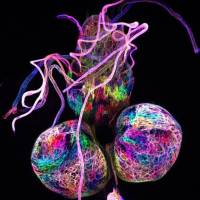
They take up little space and are easy to breed; because they are easy to look after, fruit flies or Drosophila melanogaster are used as laboratory animals in research institutes all over the world. However, that is not the only reason why they are one of the most important model organisms that are studied by geneticists.
Life Sciences - Chemistry - 20.03.2019

In order for the heart to work properly, it must exert muscular force. This involves the coordinated contraction of numerous sarcomeres, the smallest contractile units of heart muscle. Muscle contraction is brought about by the activity of conventional motor proteins, which pull on thin filaments to shorten sarcomeres.
Chemistry - Physics - 13.03.2019
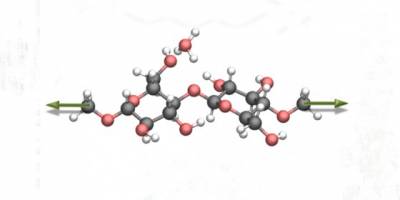
One of the greatest global challenges is the efficient use of renewable sources in order to meet the increasing demand for energy and feedstock chemicals in the future. In this context, biomass is a promising alternative to existing fossil sources such as coal or oil. Cellulose plays a decisive role here because it accounts for the largest fraction of the natural carbon storage.
Life Sciences - 12.03.2019
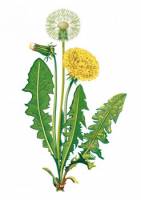
In the recently published final report of the nationwide initiative "Plant Biotechnology of the Future", a project by scientists of the University of Münster has been selected as one of six research highlights of the programme. Between 2011 and 2018, plant researchers from all over Germany worked on 27 projects with 125 subprojects - funded by the Federal Ministry of Education and Research (BMBF).
Mathematics - Life Sciences - 11.03.2019

As different as the term "dynamic" is used and understood in science, so diverse are the research areas of the University of Münster, in which dynamic even plays a central role in the title. Prof. Christopher Deninger and Prof. Mario Ohlberger from the Cluster of Excellence "Mathematics Münster", the lawyer Prof. Nils Jansen from the Cluster of Excellence "Religion and Politics" and the biochemist Prof. Lydia Sorokin from Cells-in-Motion Cluster of Excellence explain what they understand by the term in their research.
Economics - Psychology - 07.02.2019
Why forgetting at work can be a good thing
The amount of information and data which workers find themselves confronted with every day has increased enormously over the past few years. Globalisation and digitalisation have led to a steady increase in the complexity of work and business processes. Anything that is up-to-date today can already be outdated tomorrow.
Chemistry - Pharmacology - 22.01.2019
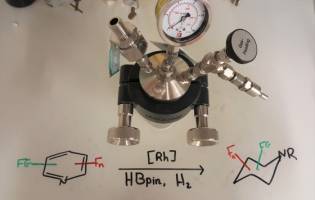
Synthetic molecules are essential for many products in our lives: medicines, crop protection agents or special materials such as Teflon. These molecules have several components, which can be combined in a variety of ways, resulting in different properties. Both so-called piperidines and fluorinated groups are particularly important.
Chemistry - Physics - 08.01.2019
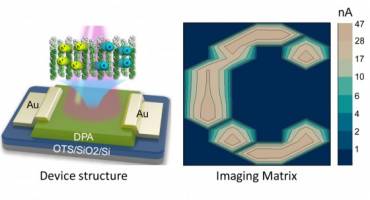
Converting light into electrical signals is essential for a number of future applications including imaging, optical communication and biomedical sensing. Researchers from the University of Münster have now developed a new molecular device enabling to detect light and translate it with high efficiency to detectable electronical current.
Paleontology - Life Sciences - 21.12.2018

A "hidden cradle of plant evolution" has been uncovered in Jordan. In Permian sedimentary rocks exposed along the east coast of the Dead Sea, palaeobotanists discovered well-preserved fossils of plant groups bearing characteristics typical of younger periods of Earth history. The Permian began some 300 million years ago and ended around 250 million years ago.
Life Sciences - 11.12.2018
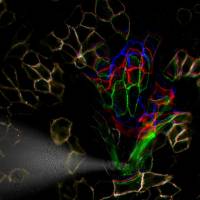
The skin is our largest organ, and, among other things, it provides protection against mechanical impacts. To ensure this protection, skin cells have to be connected to one another especially closely. Exactly how this mechanical stability is provided on the molecular level was unclear for a long time.
Life Sciences - Mechanical Engineering - 27.11.2018

When an organism develops, masses of cells combine to form different types of tissue, all of which have different functions. In order to be able to form and to move, a cell needs to generate mechanical forces by remodelling its cytoskeleton, which consists of various filaments. Filaments from the actin protein, for example, contract and expand.
Physics - Chemistry - 23.11.2018
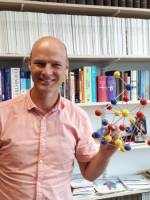
'Key-and-lock recognition' through co-assembling points of contact on a nanoscale / Potential for diagnostics, imaging and active ingredients in medicines A new method of selectively binding proteins to nanoparticles has been described by a team of German and Chinese researchers headed by Prof. Bart Jan Ravoo, a chemist at the "Center for Soft Nanoscience" at the University of Münster.
Physics - 20.09.2018
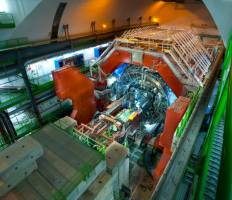
New findings published in ''Nature' on the formation of matter / Experiments provide information on the beginnings of the universe The building blocks of matter in our universe were formed in the first 10 microseconds of its existence, according to the currently accepted scientific picture. After the Big Bang about 13.7 billion years ago, matter consisted mainly of quarks and gluons, two types of elementary particles whose interactions are governed by quantum chromodynamics (QCD), the theory of strong interaction.


Environment - Mar 26
Changing vegetation in thawing permafrost increases emissions of greenhouse gases
Changing vegetation in thawing permafrost increases emissions of greenhouse gases
Environment - Mar 26
University of Manchester hits major sustainability milestone, with Main Campus becoming 100% 'Zero Landfill'
University of Manchester hits major sustainability milestone, with Main Campus becoming 100% 'Zero Landfill'
Social Sciences - Mar 26
"It would be naive to believe that a social media ban will solve all problems"
"It would be naive to believe that a social media ban will solve all problems"
Health - Mar 26
Earlier detection, better outcomes: Irish researchers target rising bowel cancer rates with new blood test
Earlier detection, better outcomes: Irish researchers target rising bowel cancer rates with new blood test
Environment - Mar 26
UK must improve energy efficiency to end 50 years of policy failure and prevent future energy crises, study argues
UK must improve energy efficiency to end 50 years of policy failure and prevent future energy crises, study argues
Mathematics - Mar 26
From Materials to Medical Imaging, Fonseca's Work Shapes the Future of Innovation
From Materials to Medical Imaging, Fonseca's Work Shapes the Future of Innovation
Health - Mar 26
MedUni Vienna shows: By using their own voices, trainee doctors learn to better understand transgender perspectives
MedUni Vienna shows: By using their own voices, trainee doctors learn to better understand transgender perspectives