


Event - Mar 17
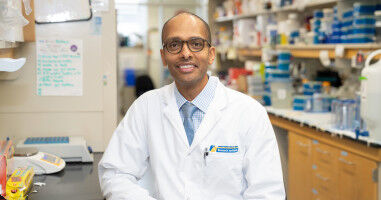
CEA Leti to Showcase Integrated Expertise In Microelectronics Reliability at IRPS 2026
CEA Leti to Showcase Integrated Expertise In Microelectronics Reliability at IRPS 2026

Health - Mar 17
AI was supposed to ease doctors' workload - instead they spend hours correcting errors
AI was supposed to ease doctors' workload - instead they spend hours correcting errors



Pharmacology - Mar 17
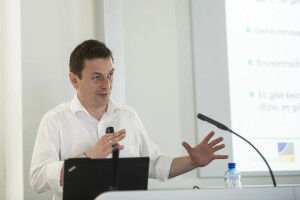
International trial finds rapid diagnostic testing alone does not reduce antibiotic prescribing for respiratory infections
International trial finds rapid diagnostic testing alone does not reduce antibiotic prescribing for respiratory infections

Social Sciences - Mar 17
Social background shapes how hard children work, according to a study by UC3M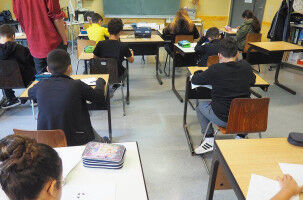
Social background shapes how hard children work, according to a study by UC3M
Innovation - Mar 17
With Robotics Innovation Center, CMU and Hazelwood Partners Sustain Community Collaborations
With Robotics Innovation Center, CMU and Hazelwood Partners Sustain Community Collaborations


news
University of Bern
Results 221 - 240 of 342.
Life Sciences - Health - 05.06.2019
It has been a mystery why REM sleep, or dream sleep, increases when the room temperature is "just right". Neuroscientists from Bern show that melanin-concentrating hormone neurons within the hypothalamus increase REM sleep when the need for body temperature defense is minimized, such as when sleeping in a warm and comfortable room temperature.
Environment - Agronomy & Food Science - 04.06.2019
A combination of insecticides and mite weakens honeybees
Today, scientists of the Institute of Bee Health of the University of Bern and the honeybee research association COLOSS have published an article in the peer-reviewed journal Scientific Reports that shows a synergistic time-lag interaction between the parasitic mite Varroa destructor and neonicotinoid insecticides reducing survival of winter honeybees, Apis mellifera.
Media - 23.05.2019
Information and language in news impact prejudice against minorities
Researchers at the Institute of Psychology show how news about immigrants and language describing immigrants shape prejudice against immigrants and other social minorities, as part of the project «Immigrants in the Media». For instance, nouns used for describing the ethnicity of immigrants enhance prejudice against immigrants more than adjectives.
Astronomy & Space - Environment - 09.05.2019
Rare-Earth metals in the atmosphere of a glowing-hot exoplanet
KELT-9 b is the hottest exoplanet known to date. In the summer of 2018, a joint team of astronomers from the universities of Bern and Geneva found signatures of gaseous iron and titanium in its atmosphere. Now these researchers have also been able to detect traces of vaporized sodium, magnesium, chromium, and the rare-Earth metals scandium and yttrium.
Physics - 03.05.2019
First demonstration of antimatter wave interferometry
An international collaboration with participation of the University of Bern has demonstrated for the first time in an interference experiment that antimatter particles also behave as waves besides having particle properties. This success paves the way to a new field of investigations of antimatter. Matter waves constitute a crucial feature of quantum mechanics, where particles have wave properties in addition to particle characteristics.
Life Sciences - 02.05.2019
Spider venom is a dangerous cocktail
Spider venom does not only consist of neurotoxins but also of a multitude of dangerous constituents. Researchers of the University of Bern present a summary of many years of spider venom research in a new study and show how various substances present in spider venom interact with each other and thus effectively render the spider's prey defenseless.
Environment - 09.04.2019
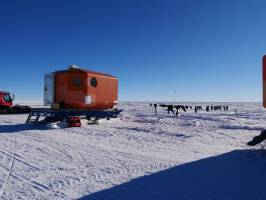
A European research consortium, in which the University of Bern is involved in, wants to drill a 1.5 million year old ice core in Antarctica. An analysis of the climate data stored in the ice should contribute to a better understanding of the alternation between warm and cold periods. As part of the EU project "Beyond EPICA - Oldest Ice", experts from 14 institutions located in 10 European countries have spent three years combing the Antarctic ice sheet to find the ideal location to retrieve the oldest ice core on the Earth.
Environment - 26.03.2019
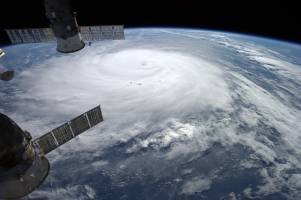
Tropical storms that move poleward influence the weather in Europe much more than previously supposed. A study from the Mobiliar Lab for Natural Risks at the University of Bern shows that the probability of heavy rainfall is twice as high when mid-latitude weather is disrupted by cyclones. These findings could ensure better extreme weather forecasts in the future.
Astronomy & Space - Computer Science - 13.03.2019
Neural networks predict planet mass
To find out how planets form astrophysicists run complicated and time consuming computer calculations. Members of the NCCR PlanetS at the University of Bern have now developed a totally novel approach to speed up this process dramatically. They use deep learning based on artificial neural networks, a method that is well known in image recognition.
Health - 12.03.2019
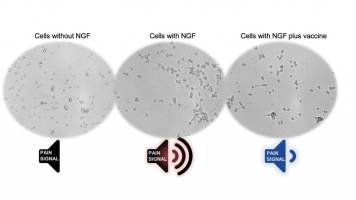
Researchers from the Universities of Bern and Oxford have developed a vaccine that blocks the effects of the main cause of pain in osteoarthritis (OA) - nerve growth factor (NGF) - in mice. In a collaborative effort between the Jenner Institute and the Kennedy Institute of Rheumatology at the University of Oxford, with colleagues in the University of Bern, and the Latvian Biomedical Research & Study Centre, scientists have developed and tested a vaccine that could be used to treat chronic pain caused by osteoarthritis, by blocking the cause of the pain - NGF.
Environment - 07.03.2019
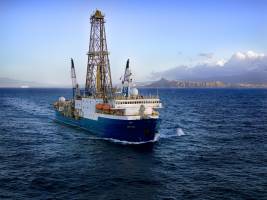
Over the last million years, ice ages have intensified and lengthened. According to a study led by the University of Bern, this previously unexplained climate transition coincides with a diminution of the mixing between deep and surface waters in the Southern Ocean. The study confirms that the Antarctic region plays a crucial role during periods of climate change.
Economics - 28.02.2019

Small and medium-sized towns are increasingly appearing on the radar of policy makers all over Europe. Findings from a project on the role and significance of these towns in Switzerland show that national policy and planning overlook their potential. For a long time, policy and research on urban development have primarily focused on large cities.
Astronomy & Space - Environment - 12.02.2019
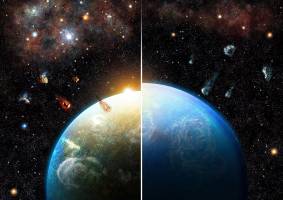
Earth's solid surface and clement climate may be in part due to a massive star in the birth environment of the Sun. Without its radioactive elements injected into the early solar system, our home planet could be a hostile ocean world covered in global ice sheets. This is demonstrated by computer simulations in which the National Centre of Competence in Research PlanetS, based at the University of Bern, was involved.
Health - Pharmacology - 08.02.2019
Inaccurate tests carried out on tuberculosis patients in developing countries often fail to reliably detect resistance to drugs, leading to incorrect treatment and a higher mortality rate. These are the results of study by an international group of researchers led by a team at the University of Bern published today.
Life Sciences - 31.01.2019
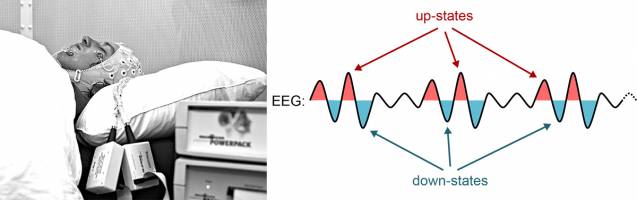
Researchers of the University of Bern, Switzerland, showed that we can acquire the vocabulary of a new language during distinct phases of slow-wave sleep and that the sleep-learned vocabulary could be retrieved unconsciously following waking. Memory formation appeared to be mediated by the same brain structures that also mediate wake vocabulary learning.
Environment - 25.01.2019
Inequality promotes deforestation in Latin America
Agricultural expansion is the main cause of deforestation in Latin America. Improvements in agricultural productivity can either enable forest conservation, or promote more deforestation. A new University of Bern study highlights the role played by inequality: high inequality leads to more deforestation, while lower inequality improves the long-term protection of remaining tropical forests.
Health - Life Sciences - 21.01.2019
Discovery of bacterial signature of intestinal disease
Researchers from the Department of Biomedical Research of the University of Bern and the University Clinic of Visceral Surgery and Medicine of the Inselspital Bern, Switzerland, have discovered that changes in the composition of the intestinal bacteria in patients with chronic inflammatory bowel disease affect the severity of the disease and the success of therapy.
Life Sciences - Health - 10.01.2019
Researchers of the University of Bern have discovered a new molecular regulatory mechanism in unicellular parasites which has never before been observed. RNA fragments do not act as brakes in the cell apparatus, but on the contrary as "stimulants": they boost protein production after periods of stress.
History & Archeology - 13.12.2018

Globally archaeological heritage is under threat by looting. The destruction of archaeological sites obliterates the basis for our understanding of ancient cultures and we lose our shared human past. Research at University of Bern shows that satellite data provide a mean to monitor the destruction of archaeological sites.
Environment - Earth Sciences - 29.11.2018
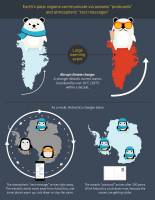
A new study found two types of climatic connection between the North Atlantic and Antarctica. One is a rapid atmospheric channel and the other a much slower connection through the ocean. During the last glacial period, these links resulted in abrupt climatic changes - and could so again in future. In a study just published in the journal "Nature", an international team of researchers describes how an ocean current repeatedly strengthening and weakening again 60,000 to 12,000 years ago led to an extremely sudden change in the climate.


Event - Mar 17
CEA Leti to Showcase Integrated Expertise In Microelectronics Reliability at IRPS 2026
CEA Leti to Showcase Integrated Expertise In Microelectronics Reliability at IRPS 2026
Health - Mar 17
AI was supposed to ease doctors' workload - instead they spend hours correcting errors
AI was supposed to ease doctors' workload - instead they spend hours correcting errors
Pharmacology - Mar 17
International trial finds rapid diagnostic testing alone does not reduce antibiotic prescribing for respiratory infections
International trial finds rapid diagnostic testing alone does not reduce antibiotic prescribing for respiratory infections
Social Sciences - Mar 17
Social background shapes how hard children work, according to a study by UC3M
Social background shapes how hard children work, according to a study by UC3M
Innovation - Mar 17
With Robotics Innovation Center, CMU and Hazelwood Partners Sustain Community Collaborations
With Robotics Innovation Center, CMU and Hazelwood Partners Sustain Community Collaborations