

Computer Science - Mar 20
New computer chip material inspired by the human brain could slash AI energy use
New computer chip material inspired by the human brain could slash AI energy use
Politics - Mar 20
Argentina 50 years on from start of dictatorship - is it forgetting the disappeared?
Argentina 50 years on from start of dictatorship - is it forgetting the disappeared?
Life Sciences - Mar 20
Courting the Competition: Some Male Fruit Flies Serenade Each Other Rather Than Fight
Courting the Competition: Some Male Fruit Flies Serenade Each Other Rather Than Fight
Social Sciences - Mar 20
Louis Theroux's manosphere documentary shows some of the subtle ways we can undermine online misogyny
Louis Theroux's manosphere documentary shows some of the subtle ways we can undermine online misogyny
Life Sciences - Mar 20
Hidden Helpers: Pittsburgh's Industrial Past Might Hold the Key to a Cleaner Future
Hidden Helpers: Pittsburgh's Industrial Past Might Hold the Key to a Cleaner Future
Pharmacology - Mar 19
GSK, University of Oxford and Imperial College London launch centre to create computer models of lungs, liver, kidneys and cartilage
GSK, University of Oxford and Imperial College London launch centre to create computer models of lungs, liver, kidneys and cartilage
Innovation - Mar 19
India's new wave of Hindu Religious Entrepreneurship is reshaping our interpretation of success
India's new wave of Hindu Religious Entrepreneurship is reshaping our interpretation of success


Pharmacology - Mar 19
Oxford University spinout Dark Blue Therapeutics acquired to advance leukaemia treatment
Oxford University spinout Dark Blue Therapeutics acquired to advance leukaemia treatment

Veterinary - Mar 19
New RVC study challenges common beliefs on desirable behaviours in designer 'Doodle' crossbreeds
New RVC study challenges common beliefs on desirable behaviours in designer 'Doodle' crossbreeds
Agronomy & Food Science - Mar 19
Bird Flu Risk to Danish Cattle - New Tool Can Warn Farmers Before Infection Spreads
Bird Flu Risk to Danish Cattle - New Tool Can Warn Farmers Before Infection Spreads

news
University of Amsterdam
Results 81 - 100 of 189.
Chemistry - Environment - 14.07.2021
Novel electrolyser for hydrogen production
High application potential thanks to robust cycling operation and use of abundant catalyst In a recent Nature Communications paper, a group of researchers led by Dr Ning Yan of the Van 't Hoff Institute for Molecular Sciences at the University of Amsterdam showcases a practical membrane-free approach to water electrolysis using earth-abundant catalysts.
Astronomy & Space - 14.07.2021
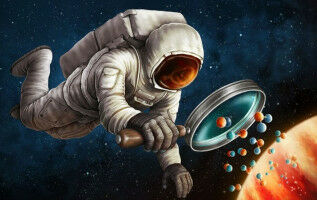
An international team of astronomers have become the first in the world to detect isotopes in the atmosphere of an exoplanet. It concerns different forms of carbon in the gaseous giant planet TYC 8998'760 -1 b at a distance of 300 light years in the constellation Musca (Fly). The weak signal was measured with ESO's Very Large Telescope in Chile and seems to indicate that the planet is relatively rich in carbon-13.
Physics - Health - 14.07.2021
NWO-Vidi grants worth €800,000 for 13 UvA researchers
The Dutch Research Council (NWO) has awarded Vidi grants worth €800,000 each to 13 experienced researchers from the UvA and the Amsterdam UMC, location AMC. The grants will enable them to develop their own innovative lines of research and set up research groups over the next five years. The Vidi grants are aimed at experienced researchers who have already conducted successful research for a number of years after their PhD.
Computer Science - Social Sciences - 09.07.2021

Research on AI in the spotlight AI can often process more information than humans, but that doesn't extend to our ability to reason by analogy. This form of reasoning is considered the greatest strength of human intelligence. While humans can think up solutions to new problems based on relationships with familiar situations, this ability is virtually absent in AI.
Life Sciences - 29.06.2021
Attention and expectations determine what we see
Our senses process a massive amount of information, yet the world around us seems quite straightforward. Selective attention and expectations play an important role in this. 'What we see every day and every moment is actively constructed by our brain. This is shaped by the knowledge we already have about the world, which gives rise to expectations about what we may see in our sensory environment, and also by attention, guided by what we find relevant,' says neuroscientist Josipa Alilovic.
Social Sciences - Computer Science - 22.06.2021
Don’t wait for that robot to take over your job
Work & Organizational Psychologist Jessie Koen discusses her research into the impact of AI on work AI can make people think differently about their work, causing them to question how skilled they still are and feel uncertain about the future of their job. Will your job soon be taken over by a robot? Such uncertainty can lead to unhealthy stress.
Astronomy & Space - Physics - 22.06.2021

For many years now, astronomers and physicists have been in a conflict. Is the mysterious dark matter that we observe deep in the Universe real, or is what we see the result of subtle deviations from the laws of gravity as we know them? In 2016, Dutch physicist Erik Verlinde proposed a theory of the second kind: emergent gravity.
Astronomy & Space - Physics - 14.06.2021

The matter inside neutron stars is less compressible than previously thought. A global collaboration, led by (among others) Anna Watts of the University of Amsterdam, has come to this conclusion after using NASA's Neutron star Interior Composition Explorer (NICER) to determine the size and mass of the most massive neutron star known: PSR J0740+6620.
Environment - Politics - 10.06.2021

The case of EU Pesticides Regulation Through its Green Deal the EU seeks a transition towards sustainable agriculture. This includes measures to reduce the risk and use of pesticides by 50% by 2030. Public support for these measures is crucial, but has been damaged in the last decade. In a unique experiment in six European countries, researchers tested how decision-making procedures could be reformed to rebuild public support.
Environment - 31.05.2021
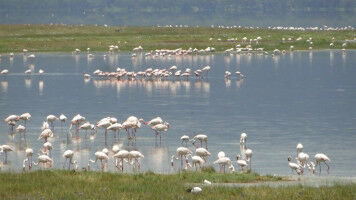
A scientific consortium has found that ancient El Niño-like weather patterns were the primary drivers of environmental change in sub-Saharan Africa over the last 620 thousand years - the critical timeframe for the evolution of our species. The group, including Dr William Gosling from the University of Amsterdam, found that these ancient weather patterns had more profound impacts in sub-Saharan Africa than glacial-interglacial cycles more commonly linked to human evolution.
Environment - 31.05.2021
Differences between juveniles and adults determine resilience of complex ecological communities
A new study shows that differences between juvenile and adult individuals are crucial for the stability of complex ecological communities. These findings, now published in the scientific journal Proceeding of the National Academy of Sciences by Prof. André de Roos from the University of Amsterdam, provides important information about the dynamics and functioning of diverse ecological communities.
Materials Science - Physics - 21.05.2021
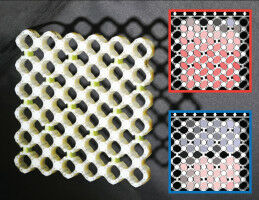
In recent years, the popularity of metamaterials has increased significantly. These materials are not found in nature or made using chemical reactions, but are designed geometrically in the physics lab. Metamaterials can be given special, often counterintuitive, properties. For the first time, physicists have now developed a toolbox to create materials that feature multiple such properties simultaneously.
Health - 20.05.2021
Factors contributing to science rejection across countries
In Western nations spirituality, more than religiosity, may be the 'enemy' of science acceptance. That is one of the conclusions of an investigation of science skepticism in 24 countries. The study shows how levels of science skepticism differ between countries, but predictors of science skepticism differ depending on the issue.
Psychology - Career - 20.05.2021
We are not as polarized as we think
A major international study on political polarization found that people across the world often exaggerate political differences and negative feelings of opposing political groups. Explaining the true feelings of the other side might help reducing these negative perceptions. UvA early-career researchers Bojana Veckalov and Sandra Geiger were part of this international collaboration of more than 80 researchers.
Politics - 18.05.2021
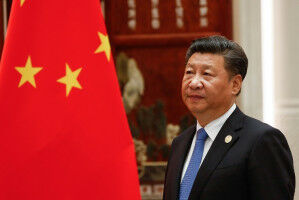
It is no secret that Chinese President Xi Jinping harbours high international ambitions. What was not yet known, however, is the role the Chinese Communist Party plays in this, specifically its International Department. Political scientist Julia Bader analysed the activities of the department. She discovered a fast-growing international network, including in the West, and a more offensive approach towards promoting China's political policies.
Chemistry - Physics - 14.05.2021
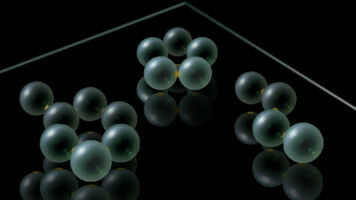
Molecules are so small that we cannot even see them with ordinary microscopes. This makes studying molecules or chemical reactions difficult: researchers are limited to either indirect observations or computer models. A team of researchers from the University of Amsterdam and New York University have now found a way to build micrometre-size model molecules using 'patchy particles'.
Health - 04.05.2021
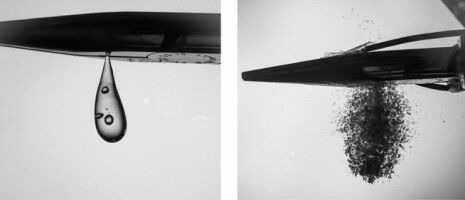
When a drinking glass falls on the floor and breaks, the shards will vary in size from large to extremely small. For the broken glass of a bus shelter, the story is different: all fragments have roughly the same size. Researchers from the University of Amsterdam, Unilever Vlaardingen and EPFL Lausanne investigated the breaking phenomenon, and discovered that two very different processes cause the two types of shards.
Health - Social Sciences - 29.04.2021
Social networks as an antidote to loneliness
The coronavirus pandemic is having a significant impact on young people's mental health. Youth care researcher Levi van Dam suggest with international colleagues that mentors chosen by young people themselves from their own social environment could be used to help them. Van Dam and his colleagues set out the tried and tested benefits of this form of support in the leading scientific journal 'JAMA Psychiatry'.
Physics - 21.04.2021
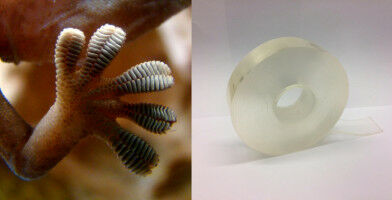
To solve practical issues, sometimes all we have to do is study nature. An often quoted example is that of the gecko, a small animal known for the phenomenal adhesive strength in its feet, which allows it to walk on walls and even ceilings. The phenomenon led to 'gecko tape', a strongly adhesive DIY-tape.
Environment - 15.04.2021
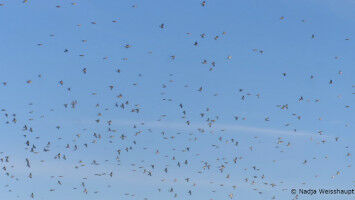
A group of international scientists, including UvA professor Judy Shamoun-Baranes, warns that changes to European meteorological data policies threaten biodiversity monitoring as they make vital data unavailable. In a letter published in Science on 16 April, they point out that policies in Europe should be adjusted to take into account the broad role that weather radars play beyond meteorology.


Computer Science - Mar 20
New computer chip material inspired by the human brain could slash AI energy use
New computer chip material inspired by the human brain could slash AI energy use
Politics - Mar 20
Argentina 50 years on from start of dictatorship - is it forgetting the disappeared?
Argentina 50 years on from start of dictatorship - is it forgetting the disappeared?
Life Sciences - Mar 20
Courting the Competition: Some Male Fruit Flies Serenade Each Other Rather Than Fight
Courting the Competition: Some Male Fruit Flies Serenade Each Other Rather Than Fight
Social Sciences - Mar 20
Louis Theroux's manosphere documentary shows some of the subtle ways we can undermine online misogyny
Louis Theroux's manosphere documentary shows some of the subtle ways we can undermine online misogyny
Life Sciences - Mar 20
Hidden Helpers: Pittsburgh's Industrial Past Might Hold the Key to a Cleaner Future
Hidden Helpers: Pittsburgh's Industrial Past Might Hold the Key to a Cleaner Future
Pharmacology - Mar 19
GSK, University of Oxford and Imperial College London launch centre to create computer models of lungs, liver, kidneys and cartilage
GSK, University of Oxford and Imperial College London launch centre to create computer models of lungs, liver, kidneys and cartilage
Innovation - Mar 19
India's new wave of Hindu Religious Entrepreneurship is reshaping our interpretation of success
India's new wave of Hindu Religious Entrepreneurship is reshaping our interpretation of success
Pharmacology - Mar 19
Oxford University spinout Dark Blue Therapeutics acquired to advance leukaemia treatment
Oxford University spinout Dark Blue Therapeutics acquired to advance leukaemia treatment
Veterinary - Mar 19
New RVC study challenges common beliefs on desirable behaviours in designer 'Doodle' crossbreeds
New RVC study challenges common beliefs on desirable behaviours in designer 'Doodle' crossbreeds
Agronomy & Food Science - Mar 19
Bird Flu Risk to Danish Cattle - New Tool Can Warn Farmers Before Infection Spreads
Bird Flu Risk to Danish Cattle - New Tool Can Warn Farmers Before Infection Spreads