

Environment - Mar 25
UCalgary expedition, with NASA, Canadian and European space agencies, sets out to better understand state of Arctic ice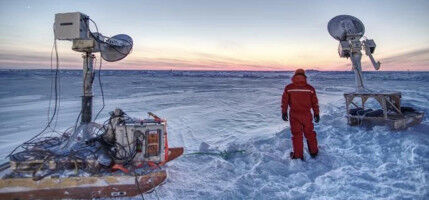
UCalgary expedition, with NASA, Canadian and European space agencies, sets out to better understand state of Arctic ice
Social Sciences - Today
Young people's wellbeing is improving in Greater Manchester, major survey finds
Young people's wellbeing is improving in Greater Manchester, major survey finds

Environment - Today
Australia's environment is improving but climate change is 'accelerating' damage to ecosystems and wildlife
Australia's environment is improving but climate change is 'accelerating' damage to ecosystems and wildlife

Psychology - Mar 23
The grief myth: it doesn't come in stages or follow a checklist - like love, it endures
The grief myth: it doesn't come in stages or follow a checklist - like love, it endures


History & Archeology - Mar 23
The UV has played a part in the discovery of a 3,500-year-old loom that sheds light on key aspects of the Bronze Age textile revolution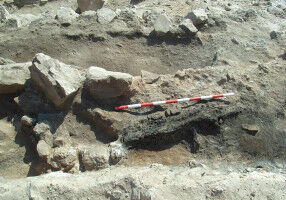
The UV has played a part in the discovery of a 3,500-year-old loom that sheds light on key aspects of the Bronze Age textile revolution
Innovation - Mar 23
The University of Valencia launches ClioViz, an open digital platform for accessing cultural heritage data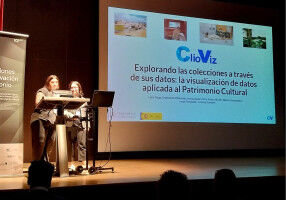
The University of Valencia launches ClioViz, an open digital platform for accessing cultural heritage data

Social Sciences - Mar 23
Study links higher concentration of pokie machines to increase in family and domestic violence
Study links higher concentration of pokie machines to increase in family and domestic violence
Health - Mar 23
Screening blitz could achieve cervical cancer elimination among Indigenous communities within a generation
Screening blitz could achieve cervical cancer elimination among Indigenous communities within a generation

Computer Science - Mar 20
New computer chip material inspired by the human brain could slash AI energy use
New computer chip material inspired by the human brain could slash AI energy use
news
Centre national de la recherche scientifique (CNRS)
Results 361 - 380 of 477.
Life Sciences - 08.08.2017
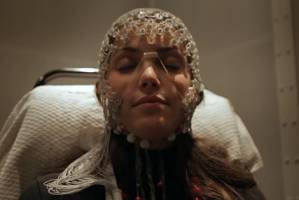
We know that sleep helps us integrate knowledge acquired during the day. But can we learn new things while sleeping? By exposing subjects to repeated auditory stimuli, a team of researchers has just demonstrated that the brain is capable of learning such sound patterns during certain sleep stages—though they may be forgotten during deep sleep.
Astronomy & Space - Physics - 07.08.2017

The rotation rate of the Sun's core has been accurately measured for the first time. The Sun, which has been remarkably stable for the past 4.6 billion years, is held together by the almost perfect equilibrium between the force of gravity, which tends to cause it to collapse, and the pressure of the thermonuclear reactions in its core.
Environment - Life Sciences - 03.08.2017
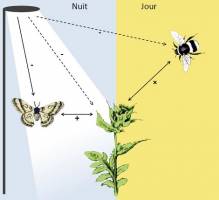
A European team, including a researcher from the Centre d'écologie et des Sciences de la Conservation (CNRS/MNHN/UPMC), has shown for the first time the direct and indirect impacts of artificial light on flower pollination. This threat to terrestrial ecosystems comes on top of other threats such as habitat loss, pesticide use, the spread of pathogens, and climate change.
Physics - 24.07.2017
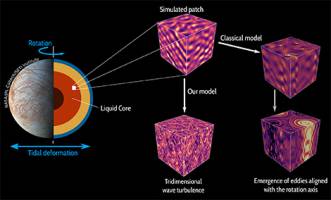
Veritable shields against high-energy particles, planets' magnetic fields are produced by iron moving in their liquid core. Yet the dominant model for explaining this system does not fit the smallest celestial bodies. Researchers at the Institut de Recherche sur les Phénomènes Hors Equilibre (IRPHE, CNRS/Aix Marseille Université/Centrale Marseille) and the University of Leeds have proposed a new model suggesting that turbulence in the liquid cores is due to tides produced by gravitational interactions between celestial bodies.
Chemistry - Health - 19.07.2017
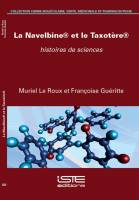
Weaving history with chemistry, Navelbine and Taxotere : Histories of Sciences (ISTE Editions, June 2017) tells the story of two anticancer drugs—both of natural origin—discovered by teams of researchers at the CNRS Institut de Chimie des Substances Naturelles (ICSN).
Astronomy & Space - 06.07.2017
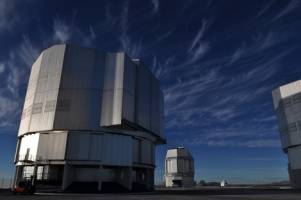
The astronomical instrument SPHERE, installed since 2014 on the Very Large Telescope (VLT) of the European Southern Observatory (ESO) in Chile, has made its first discovery of a planet around a star other than the Sun, known as an exoplanet. Only a handful of the 3,600 exoplanets detected since 1995 have been observed directly in this way.
Earth Sciences - Life Sciences - 28.06.2017

A new method used to perform geochemical analysis of fossilized eggs from China has shown that oviraptorosaurs incubated their eggs with their bodies within a 35–40° C range, similar to extant birds today. This finding is the result of Franco-Chinese collaboration coordinated by Romain Amiot of the Laboratoire de géologie de Lyon: Terre, planètes et environnement (CNRS/ENS de Lyon/Université Claude Bernard Lyon 1).
Life Sciences - Physics - 20.06.2017
How phytoplankton rule the oceans
Photosynthesis is a unique biological process that has permitted the colonization of land and sea by plants and phytoplankton respectively. While the mechanisms of photosynthesis in plants are well understood, scientists are only now beginning to elucidate how the process developed in phytoplankton.
Life Sciences - Psychology - 15.06.2017
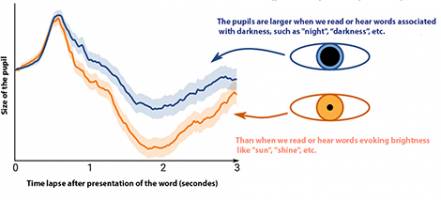
The meaning of a word is enough to trigger a reaction in our pupil: when we read or hear a word with a meaning associated with luminosity (“sun,” “shine,” etc.), our pupils contract as they would if they were actually exposed to greater luminosity. And the opposite occurs with a word associated with darkness (“night,” “gloom,” etc.
Life Sciences - 08.06.2017
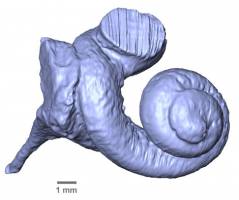
The hearing organ of the earliest whales, or protocetids, has been digitally reconstructed by paleontologists from the Institut des sciences de l'évolution de Montpellier (CNRS / Université de Montpellier / IRD / EPHE) 1 .
Life Sciences - Earth Sciences - 07.06.2017

Two studies on calcium isotopes 1 in teeth have provided new insights into both the extinction of the dinosaurs and weaning age in humans. The findings of these studies, conducted by CNRS researchers at Lyon ENS and Université Claude Bernard Lyon 1, were published, respectively, on 25 and 30 May 2017 in Current Biology and PNAS .
Social Sciences - Life Sciences - 24.05.2017
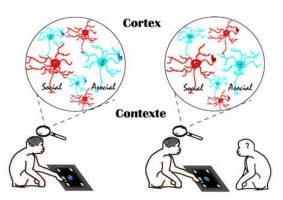
The existence of new “social” neurons has just been demonstrated by scientists from the Institut de neurosciences des systèmes (Aix-Marseille University / INSERM), the Laboratoire de psychologie sociale et cognitive (Université Clermont Auvergne / CNRS), and the Institut de neurosciences de la Timone (Aix-Marseille University / CNRS).
Chemistry - Physics - 19.05.2017
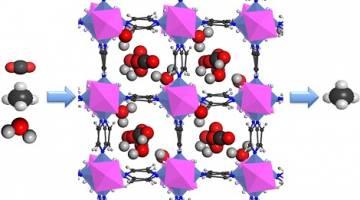
The fields of gas filtration and purification require materials whose porosity can be perfectly controlled.
Physics - Astronomy & Space - 17.05.2017
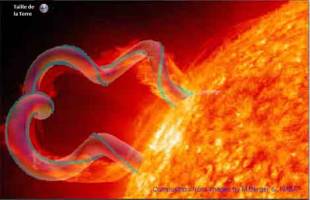
The emerging discipline of space meteorology aims to reliably predict solar flares so that we may better guard against their effects. Using 3D numerical models 1 , an international team headed by Etienne Pariat, a researcher at LESIA (Observatoire de Paris / CNRS / Université Paris Diderot / UPMC), has discovered a proxy that could be used to forecast an eruptive event.
Art & Design - 09.05.2017

Researchers at the Institut Jean Le Rond d'Alembert (CNRS/UPMC) have shown that recently-made violins have better sound projection 1 than those built by the famous violinmaker Antonio Stradivarius. This study, published in the journal PNAS on May 8th 2017, also shows that, despite the prestige of these old Italian violins, listeners prefer the sound made by recent instruments and cannot distinguish the two.
Environment - Life Sciences - 08.05.2017
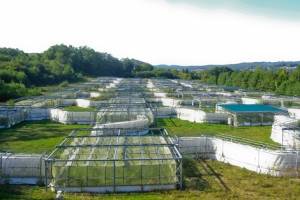
The deleterious effects of climate change on bacterial species composing the gut microbiota 1 of a lizard have been demonstrated by researchers from the Evolution and Biological Diversity laboratory in Toulouse (CNRS / Université Toulouse III—Paul Sabatier / ENSFEA / IRD), the Theoretical and Experimental Ecology Station (CNRS / Université Toulouse III—Paul Sabatier), and the University of Exeter in Great Britain 2 .
Health - 02.05.2017
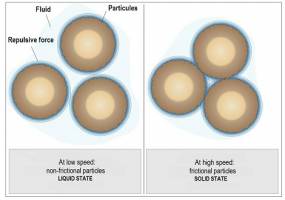
Some particle suspensions, such as grains of starch in water that are liquid at rest, suddenly solidify when they are subjected to vigorous shearing or impact. This fascinating behavior, called shear thickening, can make it possible to "walk on water" or design lightweight and supple jackets that are nevertheless highly shock-resistant.
Life Sciences - 27.04.2017
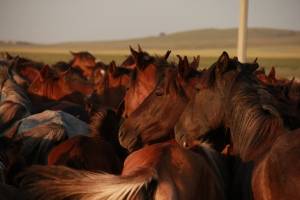
By studying the genome of Scythian horses, an international team of researchers is outlining the relations that these nomads from Iron Age Central Asia had with their horses—and lifting the veil on some of the mysteries of animal domestication. Published in the journal Science on April 28, 2017, this research was led by Ludovic Orlando, CNRS senior researcher at the Laboratory of Molecular Anthropology and Image Synthesis (CNRS/Université Toulouse III – Paul Sabatier/Université Paris Descartes) and professor at the Natural History Museum of Denmark.
Life Sciences - 26.04.2017
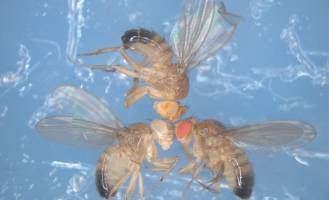
Giacomo Cavalli's team at the Institute of Human Genetics (University of Montpellier / CNRS), in collaboration with the French National Institute for Agricultural Research (INRA), 1 has demonstrated the existence of transgenerational epigenetic inheritance 2 (TEI) among Drosophila fruit flies. By temporarily modifying the function of Polycomb Group (PcG) proteins—which play an essential role in development—the researchers obtained fruit fly lines having the same DNA sequence but different eye colors.
Sport - Administration - 24.04.2017
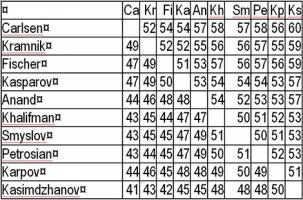
The ELO system, which most chess federations use today, ranks players by the results of their games. Although simple and efficient, it overlooks relevant criteria such as the quality of the moves players actually make. To overcome these limitations, Jean-Marc Alliot of the Institut de recherche en informatique de Toulouse (IRIT - CNRS/INP Toulouse/Université Toulouse Paul Sabatier/Université Toulouse Jean Jaurès/Université Toulouse Capitole) demonstrates a new system, published on 24 april 2017 in the International Computer Games Association Journal.


Environment - Mar 25
UCalgary expedition, with NASA, Canadian and European space agencies, sets out to better understand state of Arctic ice
UCalgary expedition, with NASA, Canadian and European space agencies, sets out to better understand state of Arctic ice
Social Sciences - Today
Young people's wellbeing is improving in Greater Manchester, major survey finds
Young people's wellbeing is improving in Greater Manchester, major survey finds
Environment - Today
Australia's environment is improving but climate change is 'accelerating' damage to ecosystems and wildlife
Australia's environment is improving but climate change is 'accelerating' damage to ecosystems and wildlife
Psychology - Mar 23
The grief myth: it doesn't come in stages or follow a checklist - like love, it endures
The grief myth: it doesn't come in stages or follow a checklist - like love, it endures
History & Archeology - Mar 23
The UV has played a part in the discovery of a 3,500-year-old loom that sheds light on key aspects of the Bronze Age textile revolution
The UV has played a part in the discovery of a 3,500-year-old loom that sheds light on key aspects of the Bronze Age textile revolution
Innovation - Mar 23
The University of Valencia launches ClioViz, an open digital platform for accessing cultural heritage data
The University of Valencia launches ClioViz, an open digital platform for accessing cultural heritage data
Social Sciences - Mar 23
Study links higher concentration of pokie machines to increase in family and domestic violence
Study links higher concentration of pokie machines to increase in family and domestic violence
Health - Mar 23
Screening blitz could achieve cervical cancer elimination among Indigenous communities within a generation
Screening blitz could achieve cervical cancer elimination among Indigenous communities within a generation
Computer Science - Mar 20
New computer chip material inspired by the human brain could slash AI energy use
New computer chip material inspired by the human brain could slash AI energy use