



Event - Mar 17
CEA Leti to Showcase Integrated Expertise In Microelectronics Reliability at IRPS 2026
CEA Leti to Showcase Integrated Expertise In Microelectronics Reliability at IRPS 2026

Health - Mar 17
AI was supposed to ease doctors' workload - instead they spend hours correcting errors
AI was supposed to ease doctors' workload - instead they spend hours correcting errors



Pharmacology - Mar 17
International trial finds rapid diagnostic testing alone does not reduce antibiotic prescribing for respiratory infections
International trial finds rapid diagnostic testing alone does not reduce antibiotic prescribing for respiratory infections

Social Sciences - Mar 17
Social background shapes how hard children work, according to a study by UC3M
Social background shapes how hard children work, according to a study by UC3M
Innovation - Mar 17
With Robotics Innovation Center, CMU and Hazelwood Partners Sustain Community Collaborations
With Robotics Innovation Center, CMU and Hazelwood Partners Sustain Community Collaborations




news
History & Archeology
Results 401 - 420 of 979.
Law - History & Archeology - 01.02.2021
VUB rediscovers Belgian contribution to peace
In his doctoral research, VUB legal historian Wouter De Rycke investigated the unique but forgotten contribution of the Mons lawyer Louis Bara (1821-1857) to the 19th-century international peace campaign. According to De Rycke, his research offers a glimpse into a rather unknown episode of our history: " In the 19th century, the first internationally organised movement to declare war emerged, a kind of 'NGO' avant la lettre.
History & Archeology - Environment - 27.01.2021
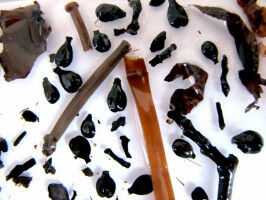
Although the reputation of Champagne is well established, the history of Champagne wines and vineyards is poorly documented. However, a research team led by scientists from the CNRS and the Université de Montpellier at the Institut des sciences de l'évolution de Montpellier 1 has just lifted the veil on this history by analysing the archaeological grape seeds from excavations carried out in Troyes and Reims.
Environment - History & Archeology - 25.01.2021
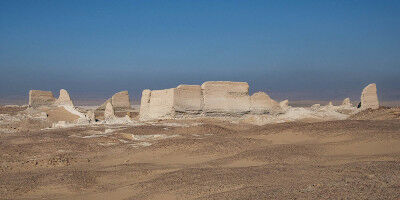
The absence of monsoon rains at the source of the Nile was the cause of migrations and the demise of entire settlements in the late Roman province of Egypt. This demographic development has been compared with environmental data for the first time by professor of ancient history, Sabine Huebner of the University of Basel - leading to a discovery of climate change and its consequences.
Earth Sciences - History & Archeology - 20.01.2021
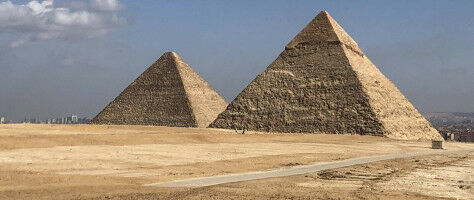
An interview with Prof. Christian Große about his pyramid research Measuring a height of 139 meters (455 ft.), the largest of the three pyramids of Giza is one of the oldest edifices in the world. Yet, even after 4,500 years, this architectural masterpiece still leaves some questions unanswered.
Astronomy & Space - History & Archeology - 14.01.2021

The sun is the only star in our system. But many of the points of light in our night sky are not as lonely. By some estimates, more than three-quarters of all stars exist as binaries - with one companion - or in even more complex relationships. Stars in close quarters can have dramatic impacts on their neighbors.
History & Archeology - 12.01.2021
New insights from original Domesday survey revealed | University of Oxford
Prof. Stephen Baxter is a world-leading expert on Domesday Book. His research has formed the basis of radio and television documentaries, including on the Domesday survey (BBC2) . He is Clarendon Professor of Medieval History and Barron Fellow in Medieval History at St Peter's College, Oxford ( stephen.baxter@spc.ox.ac.uk ) This new interpretation of Domesday is advanced by Stephen Baxter, 'How and Why was Domesday Made'', English Historical Review , Volume 135, Issue 576 ( published online 22 December, 2020 and freely accessible ).
Health - History & Archeology - 12.01.2021
Archaeologists find skeletons at Binnengasthuis premises
Excavation work in the courtyard at the construction site for the new University Library has been completed. During the dig, the municipality of Amsterdam's Knowledge Centre for Monuments and Archaeology (MenA) conducted extensive archaeological research and skeletal human remains were found. Physical anthropology, a sub-discipline of Archaeology, is the study of the human skeleton in an archaeological context.
Life Sciences - History & Archeology - 23.12.2020

An international team of scientists reveals the genetic makeup of the people who lived in the Caribbean between about 400 and 3,100 years ago-at once settling several archaeologic and anthropologic debates, illuminating present-day ancestries and reaching startling conclusions about Indigenous population sizes when Caribbean cultures were devastated by European colonialism beginning in the 1490s.
History & Archeology - Earth Sciences - 09.12.2020

Was burial of the dead practiced by Neandertals or is it an innovation specific to our species? There are indications in favour of the first hypothesis but some scientists remain sceptical. For the first time in Europe, however, a multi-disciplinary team led by researchers at the CNRS and the Muséum national d'histoire naturelle (France) and the University of the Basque Country (Spain) 1 has demonstrated, using a variety of criteria, that a Neandertal child was buried, probably around 41,000 years ago, at the Ferrassie site (Dordogne).
History & Archeology - Environment - 07.12.2020
Archaeologists Explore Secrets of Neolithic Village off Israel’s Coast
UC San Diego archaeologist and Qualcomm Institute (QI) affiliate Thomas Levy and Assaf Yasur-Landau of the University of Haifa in Haifa, Israel and their teams have completed a combined physical and virtual excavation of a Neolithic underwater settlement off Israel's Carmel coast. The expedition could reveal secrets about prehistoric social evolution, climate and environmental change from more than 8,000 years ago.
History & Archeology - Chemistry - 02.12.2020
African trade routes sketched out by mediaeval beads
An analysis of archaeological glass beads discovered in sub-Saharan West Africa brings to light the full extent of the region's international trade routes between the 7th and 13th centuries. The origin of glass beads dates back to early ancient times. The chemical composition of the beads and their morphological and technical characteristics can reveal where they come from; this information can then be used to reconstruct the trade channels between glass production areas and the sites where the beads were used at different times.
Art & Design - History & Archeology - 27.11.2020

The summer of 2019 saw the kick-off of the largest and most multifaceted research project ever to focus on Rembrandt's famous painting The Night Watch. Ever since the museum reopened after its closure earlier this year following coronavirus measures, the team has been working under adapted conditions.
History & Archeology - Campus - 10.11.2020
Hundreds of Copies of Newton’s Principia Found in New Census
In a story of lost and stolen books and scrupulous detective work across continents, a Caltech historian and his former student have unearthed previously uncounted copies of Isaac Newton's groundbreaking science book Philosophiae Naturalis Principia Mathematica , known more colloquially as the Principia .
History & Archeology - 05.11.2020
Neolithic construction boom led to large-scale mega henges being built across southern Britain
One of the antler picks that were sampled during the research. As these picks were used to dig out the ditches of the henge, they provide a good indication of the date that the monument was constructed. (Credit: Cardiff University) Frantic building activity around 2500 BC resulted in massive ceremonial structures appearing in southern Britain, a study from Cardiff University says.
History & Archeology - Social Sciences - 04.11.2020
Analysis: Did prehistoric women hunt? New research suggests so
For a long time, it was assumed that hunting in prehistoric societies was primarily carried out by men. Now a new study adds to a body of evidence challenging this idea, says Honorary Research Fellow Dr Annemieke Milks (UCL Archaeology). The research reports the discovery of a female body, buried alongside hunting tools, in the Americas some 9,000 years ago.
Earth Sciences - History & Archeology - 28.09.2020
The testimony of trees: how volcanic eruptions shaped 2000 years of world history
Researchers have shown that over the past two thousand years, volcanoes have played a larger role in natural temperature variability than previously thought, and their climatic effects may have contributed to past societal and economic change. Some climate models assume that the effect of volcanoes is punctuated and short.
History & Archeology - Materials Science - 23.09.2020
Chromium steel was first made in ancient Persia
Chromium steel - similar to what we know today as tool steel - was first made in Persia, nearly a millennium earlier than experts previously thought, according to a new study led by UCL. The discovery, published in the Journal of Archaeological Science , was made with the aid of a number of medieval Persian manuscripts, which led the researchers to an archaeological site in Chahak, southern Iran.
Social Sciences - History & Archeology - 18.09.2020
What plants were smoked in pre-colonial North America? Ancient pipes hold clues
In a groundbreaking new study, a University of Chicago researcher used metabolomics-a big-data approach to study small molecules called metabolites-to uncover the relationship between plants and people before and after European colonization of North America. Collaborating with colleagues at Washington State University, UChicago postdoctoral researcher Korey Brownstein used the approach to study the differences between closely related plant species found in ancient pipes.
Social Sciences - History & Archeology - 17.09.2020

Traces of violence on 1700 year old skeletons allow researchers to reconstruct warfare and sacrifices of nomads in Siberia. An international and interdisciplinary team of anthropologists, archaeologists and specialists in forensics sciences led by Marco Milella from the University of Bern performed a detailed and revealing analysis of the traumas found on the skeletal remains.
Life Sciences - History & Archeology - 16.09.2020
World’s largest ever DNA sequencing of Viking skeletons reveals they weren’t all Scandinavian
Invaders, pirates, warriors - the history books taught us that Vikings were brutal predators who travelled by sea from Scandinavia to pillage and raid their way across Europe and beyond. The results change the perception of who a Viking actually was.


Event - Mar 17
CEA Leti to Showcase Integrated Expertise In Microelectronics Reliability at IRPS 2026
CEA Leti to Showcase Integrated Expertise In Microelectronics Reliability at IRPS 2026
Health - Mar 17
AI was supposed to ease doctors' workload - instead they spend hours correcting errors
AI was supposed to ease doctors' workload - instead they spend hours correcting errors
Pharmacology - Mar 17
International trial finds rapid diagnostic testing alone does not reduce antibiotic prescribing for respiratory infections
International trial finds rapid diagnostic testing alone does not reduce antibiotic prescribing for respiratory infections
Social Sciences - Mar 17
Social background shapes how hard children work, according to a study by UC3M
Social background shapes how hard children work, according to a study by UC3M
Innovation - Mar 17
With Robotics Innovation Center, CMU and Hazelwood Partners Sustain Community Collaborations
With Robotics Innovation Center, CMU and Hazelwood Partners Sustain Community Collaborations