


Health - Today
AI was supposed to ease doctors' workload - instead they spend hours correcting errors
AI was supposed to ease doctors' workload - instead they spend hours correcting errors



Pharmacology - Today
International trial finds rapid diagnostic testing alone does not reduce antibiotic prescribing for respiratory infections
International trial finds rapid diagnostic testing alone does not reduce antibiotic prescribing for respiratory infections
Social Sciences - Today
Social background shapes how hard children work, according to a study by UC3M
Social background shapes how hard children work, according to a study by UC3M




Art & Design - Today
The inheritance of making: Dennis Golding's art honours community and his Redfern roots
The inheritance of making: Dennis Golding's art honours community and his Redfern roots


news
History & Archeology
Results 801 - 820 of 979.
History & Archeology - 25.09.2012
People change moral position without even realising it
In a ‘trick’ survey, participants switched their opinion on ethical issues without being aware of it. This has been shown in a study by cognitive science researchers at Lund University, Sweden, that was published recently in the open access journal PLOS ONE. In the study, led by Lars Hall, Petter Johansson and Thomas Strandberg, participants were presented with a questionnaire about either fundamental ethical principles or current hot topics with moral implications, such as illegal immigration or the legalisation of prostitution.
History & Archeology - Law - 17.09.2012
Researchers ask:“Are the religious unfairly treated?”
In the last decade a raft of legislation has attempted to bring about equality for people of all religions and beliefs within British society. A University of Derby-led research team who have been investigating what and how much has really changed over this decade will present their preliminary findings at a series of workshops around the UK this autumn.
History & Archeology - 10.09.2012
In horseshoe crab history, legs come and go
Horseshoe crabs, including the iconic Limulus we know today, have existed for more than 450 million years. Over that long history, evolutionary change has particularly affected the nature of their legs. A new fossil discovery in Britain captures a previously unseen stage in the evolution of these ancient arthropods - the transformation of two-branched legs into nearly identical but separately attached limbs, one of which was destined to disappear.
History & Archeology - Life Sciences - 06.09.2012

German Idealism changed the world and influenced politics. art and numerous other fields. The ways in which it shaped the modern world have been the subject of a three-year research project, which reaches its conclusion in Cambridge this week. —Nick Boyle The culmination of an international project which aims to trace the legacy of German Idealism - an explosion of philosophical ideas which emerged from Germany during the 19th century - begins in Cambridge today (Thursday, 6 September).
History & Archeology - 04.09.2012

An ancient Italian town whose remains are buried beneath the earth has been mapped by a team of researchers, revealing evidence of a bustling social and economic settlement 1,500 years ago. Having the complete streetplan and being able to pick out individual details allows us to start zoning the settlement and examine how it worked and changed through time." —Martin Millett An ancient Italian town, which disappeared after its abandonment 1
History & Archeology - Earth Sciences - 03.09.2012
Syrian obsidian discovery opens new chapter in Middle Eastern studies
An archaeologist from the University of Sheffield has revealed the origin and trading routes of razor-sharp stone tools 4,200 years ago in Syria. Ancient sites and cultural heritage are under threat in Syria due to the current conflict. An interdisciplinary research team hopes this new discovery, which has major implications for understanding the world's first empire, will help to highlight the importance of protecting Syria's heritage.
History & Archeology - 30.08.2012

Excavations at Britain's largest prehistoric hillfort have given archaeologists from Cardiff and Cambridge universities a glimpse of what life was like inside the fort more than 2000 years ago. Niall Sharples of Cardiff's School of History, Archaeology and Religion and Chris Evans of Cambridge's Archaeological Unit are jointly leading a team excavating Ham Hill in Somerset.
History & Archeology - 30.08.2012

A second season of excavations at Britain's biggest Iron Age hill-fort has uncovered remains of Roman weaponry, and the site of the first "ham stone" house. The fort's construction marked a major transformation of the landscape as a considerable area of farmland had to be abandoned." —Chris Evans, Cambridge Archaeological Unit.
History & Archeology - Linguistics & Literature - 21.08.2012
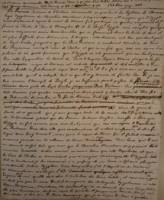
A newly-discovered manuscript may represent Edward Gibbon's earliest experiment in the irony for which he would become famous, an Oxford University English academic has found. Professor David Womersley of Oxford University's English Faculty discovered the manuscript written by the 19-year old Edward Gibbon, which had been left in the attic of a house in Lausanne for many years.
History & Archeology - Life Sciences - 09.08.2012
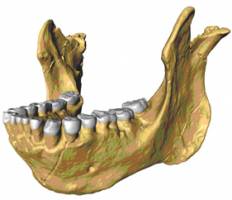
Exciting new fossils discovered east of Lake Turkana confirm that there were two additional species of our genus - Homo - living alongside our direct human ancestral species, Homo erectus , almost two million years ago. The finds, announced in Nature today, include a face, a remarkably complete lower jaw, and part of a second lower jaw.
History & Archeology - Chemistry - 06.08.2012
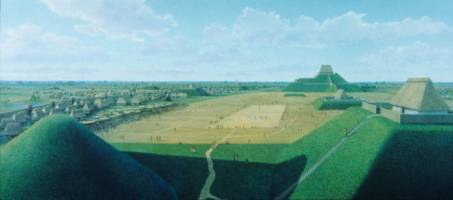
CHAMPAIGN, lll. People living 700 to 900 years ago in Cahokia, a massive settlement near the confluence of the Missouri and Mississippi Rivers, ritually used a caffeinated brew made from the leaves of a holly tree that grew hundreds of miles away, researchers report. The discovery - made by analyzing plant residues in pottery beakers from Cahokia and its surroundings - is the earliest known use of this "black drink" in North America.
Life Sciences - History & Archeology - 01.08.2012
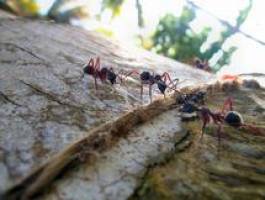
Studies of how rats and ants rescue other members of their species do not prove that animals other than humans have empathy, according to a team led by Oxford University scientists. Empathy - recognising and sharing feelings experienced by another individual - is a key human trait and to understand its evolution numerous studies have looked for evidence of it in non-human animals.
History & Archeology - 26.07.2012
Repetitious, Time-Intensive Magical Rituals Considered More Effective, Study Shows
AUSTIN, Texas — Even in this modern age of science, people are likely to find logic in supernatural rituals that require a high degree of time and effort, according to new research from The University of Texas at Austin. The study, published in the June issue of Cognition , is the first psychological analysis of how people of various cultures evaluate the efficacy of ritual beliefs.
History & Archeology - Administration - 25.07.2012
16Nov-Terrorism
Community policing methods - based on dialogue, support and trust - are significantly helping counter-terrorism efforts in post 7/7 Britain, new research at the University of Birmingham has revealed. Researchers looked at the effective use of partnership work with Muslim groups, including those deemed as 'radicals', in so called 'soft' policing methods, and found that the increased trust and access to community-based expertise is helping to prevent extremist propaganda and acts of violence.
History & Archeology - 24.07.2012
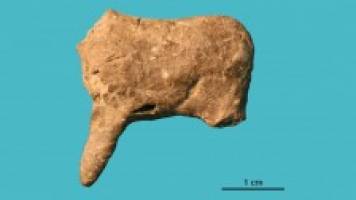
Ceramics found on the coast of the Adriatic attest to a hitherto unknown artistic culture which flourished during the last Ice Age, thousands of years before pottery was commonly used. We are starting to see that several distinct Palaeolithic societies made art from ceramic materials long before the Neolithic era, when ceramics became more common." —Preston Miracle Evidence of a community of prehistoric artists and craftspeople who "invented" ceramics during the last Ice Age - thousands of years before pottery became commonplace - has been found in modern-day Croatia.
History & Archeology - 23.07.2012
Future of war revealed by Sheffield scientists
Models to accurately predict the future of military conflicts based on classified information from the Afghan war revealed by whistleblower website Wikileaks have been created by scientists at the University of Sheffield. Using war logs with about 77,000 events including location, day and time of occurrence and other details from the war in Afghanistan between 2004 and 2009, the team of scientists - including scientists from the universities of Edinburgh and Columbia, USA - were able to predict armed opposition group activity way into the future of the battle.
Life Sciences - History & Archeology - 19.07.2012
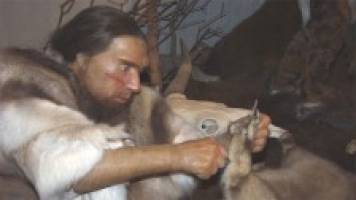
The traditional image of Neanderthals as gritty people who spent most of their time out hunting might not be entirely accurate, according to a new study revealing that they may have had to devote hours to daily subsistence tasks instead. —Colin Shaw Our extinct prehistoric cousins, the Neanderthals, may have spent less of their time living the rugged life of the hunter and more of it carrying out tedious domestic chores, a new study suggests.
History & Archeology - Social Sciences - 12.07.2012

Similar women's and men's Olympic sports might look alike on television but how those competitions - and their competitors - are portrayed during broadcasts often differs significantly, according to a study by researchers at Penn State and Elizabethtown College. Researchers found women were often discussed positively as role models during the Olympics.
History & Archeology - 06.07.2012
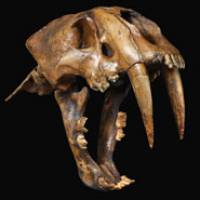
Modern cats diverged in skull shape from their sabre-toothed ancestors early in their evolutionary history and then followed separate evolutionary trajectories, according to new research from the University of Bristol published today in PLoS ONE. The study also found that the separation between modern domestic cats and big cats such as lions and tigers is also deeply rooted.
History & Archeology - 25.06.2012

A landmark study of criminal activity in teenagers indicates that some never see crime as a course of action while others are vulnerable to environmental inducements to crime. The study reveals factors that explains why some young people are 'crime-prone' and others 'crime-averse', and explains why crime hot spots occur.


Health - Today
AI was supposed to ease doctors' workload - instead they spend hours correcting errors
AI was supposed to ease doctors' workload - instead they spend hours correcting errors
Pharmacology - Today
International trial finds rapid diagnostic testing alone does not reduce antibiotic prescribing for respiratory infections
International trial finds rapid diagnostic testing alone does not reduce antibiotic prescribing for respiratory infections
Social Sciences - Today
Social background shapes how hard children work, according to a study by UC3M
Social background shapes how hard children work, according to a study by UC3M
Art & Design - Today
The inheritance of making: Dennis Golding's art honours community and his Redfern roots
The inheritance of making: Dennis Golding's art honours community and his Redfern roots