


Event - Mar 17
CEA Leti to Showcase Integrated Expertise In Microelectronics Reliability at IRPS 2026
CEA Leti to Showcase Integrated Expertise In Microelectronics Reliability at IRPS 2026

Health - Mar 17
AI was supposed to ease doctors' workload - instead they spend hours correcting errors
AI was supposed to ease doctors' workload - instead they spend hours correcting errors



Pharmacology - Mar 17
International trial finds rapid diagnostic testing alone does not reduce antibiotic prescribing for respiratory infections
International trial finds rapid diagnostic testing alone does not reduce antibiotic prescribing for respiratory infections

Social Sciences - Mar 17
Social background shapes how hard children work, according to a study by UC3M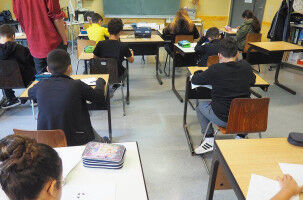
Social background shapes how hard children work, according to a study by UC3M
Innovation - Mar 17
With Robotics Innovation Center, CMU and Hazelwood Partners Sustain Community Collaborations
With Robotics Innovation Center, CMU and Hazelwood Partners Sustain Community Collaborations





news
University of Bern
Results 181 - 200 of 342.
Health - Life Sciences - 06.07.2020
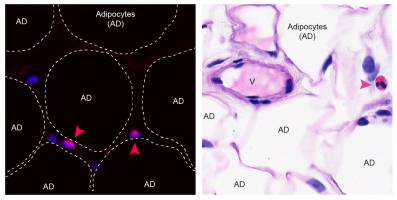
Frailty and immune decline are two main features of old age. Researchers from the University of Bern and the University Hospital Bern now demonstrate in an animal model that these two age-related impairments can be halted and even partially reversed using a novel cell-based therapeutic approach. Elderly people are more prone to infectious diseases as the function of their immune system continuously declines with progression of age.
Astronomy & Space - Environment - 01.07.2020
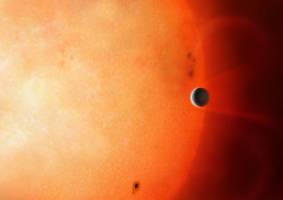
Researchers led by the University of Warwick have discovered the first exposed core of an exoplanet, which provides an unprecedented glimpse inside the interior of a planet. Christoph Mordasini from the University of Bern is leading the theoretical interpretation of this discovery. The newly discovered exoplanet TOI 849 b offers the unique opportunity to peer inside the interior of a planet and learn about its composition.
Environment - Life Sciences - 01.07.2020
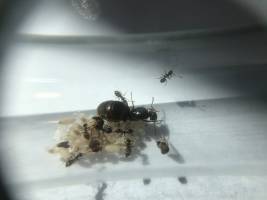
This week, scientists of the Institute of Bee Health of the University of Bern have published an article in the peer-reviewed journal Communications Biology, which shows how even low doses of neonicotinoid insecticides, as they may realistically occur in contaminated soils, adversely affect the development of black garden ants (Lasius niger).
Environment - 17.06.2020
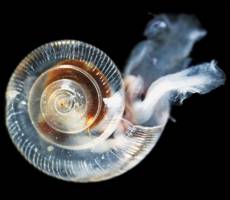
The Arctic Ocean will take up more CO2 over the 21st century than predicted by most climate models. This additional CO2 causes a distinctly stronger ocean acidification. These results were published in a study by climate scientists from the University of Bern and École normale supérieure in Paris. Ocean acidification threatens the life of calcifying organisms - such as mussels and "sea butterflies" - and can have serious consequences for the entire food chain.
Health - Life Sciences - 04.06.2020
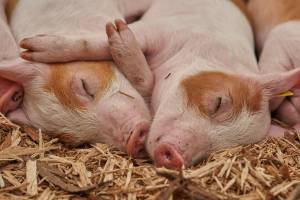
New-born piglets often die painfully from infection with an intestinal bacterium. A team of researchers from 3 faculties at the University of Bern has now discovered how the bacterium causes fatal intestinal bleeding.
Life Sciences - Health - 25.05.2020
Even natural products can be harmful for the unborn child
Plant products ingested by pregnant women through their diet are broken down by the intestinal microbiota into chemical substances, some of which can cross the placental barrier and reach the fetus. These foreign substances can harm the unborn child, even if they are of "natural origin". Researchers at the Department for BioMedical Research (DBMR) at the University of Bern and Inselspital, University Hospital Bern, therefore warn against underestimating the effects of such substances.
Health - Social Sciences - 20.05.2020
Dynamic measures against the coronavirus examined
An alternating cycle of suppression interventions and relaxation could offer a pragmatic strategy - particularly for developing countries - to prevent health systems from being overloaded while reducing the economical and societal burden. The coronavirus pandemic has imposed an unprecedented challenge to global healthcare systems, societies and governments.
Environment - Health - 19.05.2020
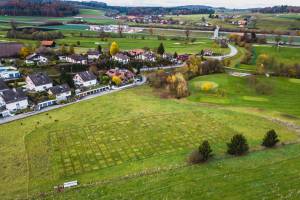
The "PaNDiv" experiment, established by researchers of the University of Bern on a 3000 m2 field site, is the largest biodiversity-ecosystem functioning experiment in Switzerland and aims to better understand how increases in nitrogen affect grasslands. The first article from this experiment has just been published in the scientific journal Functional Ecology after more than four years of work.
Health - Life Sciences - 14.05.2020
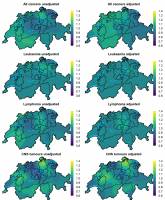
A research group under the direction of the Institute of Social and Preventive Medicine of the University Bern has investigated the spatial distribution of childhood cancer risks in Switzerland for the period 1985-2015. The group found evidence of increased risks in certain areas, particularly for brain tumors.
Health - Life Sciences - 04.05.2020
Bern coronavirus clone goes "viral"
Researchers in virology and veterinary bacteriology at the University of Bern have cloned the novel coronavirus (SARS-CoV-2). The synthetic clones are being used by research groups worldwide to test corona samples, find antiviral drugs and develop vaccines as quickly as possible. The method developed in Bern can also be used in future to combat other highly infectious viruses.
Physics - Astronomy & Space - 23.04.2020

The international T2K Collaboration has published results showing the strongest evidence to date implying the breaking of the symmetry between matter and antimatter in so-called neutrino oscillations. This is a major step towards the understanding of the dominance of matter over antimatter in the Universe.
Life Sciences - Health - 14.04.2020
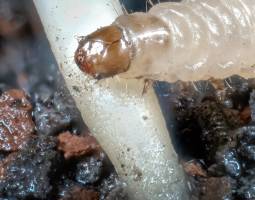
In a new study, researchers from the University of Bern developed an experimental approach that may be used to improve a wide range of organisms that rely on microbial symbionts to control insect pests. This approach opens up a new avenue for the improvement of biological control strategies towards a more sustainable, pesticide-free agriculture.
Environment - 08.04.2020
Agriculture began in the Amazon 10’000 years ago
As a new study shows, more than 10,000 years ago, people in the southwest of the Amazon began growing manioc and squash, 8,000 years earlier than previously thought. The area is thus one of the early Holocene centres of plant domestication in the world. People also changed the landscape by creating thousands of so-called forest islands.
Chemistry - Life Sciences - 07.04.2020
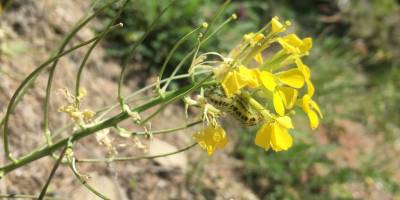
A new study led by Tobias Züst from the Institute of Plant Sciences of the University of Bern shows that a pair of complementary chemical defenses evolved independently in wallflowers, shaped by co-evolution with local insects. A pair of chemicals used by wallflowers and their kin to ward off predators have evolved to complement each other, with one targeting generalist herbivores and the other targeting specialized herbivores that have become resistant to the generalist defense.
Life Sciences - Environment - 01.04.2020
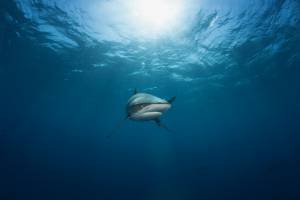
Large open-water fish predators such as tunas or sharks hunt for prey more intensively in the temperate zone than near the equator. With this result, a study headed by Marius Roesti of the University of Bern is challenging a long-standing explanation for the distribution of biodiversity on our planet.
Astronomy & Space - Materials Science - 12.03.2020
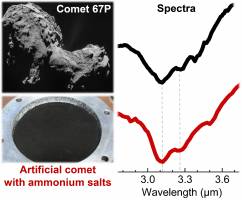
One of the basic building blocks of life is nitrogen. An international consortium was able to detect ammonium salt containing nitrogen on the cometary surface of Chury thanks to a method using analogues for comet material. The method on which the study on the detection of ammonium salt is based was developed at the University of Bern.
Environment - 25.02.2020
Investments by the super-rich drive deforestation
Wealthy individuals are increasingly investing in agriculture. Their investments boost production of plant-based raw materials for human consumption, industrial uses, and animal fodder. The resulting capital flows directly contribute to deforestation in the global South, especially in the tropics. That is the conclusion of a new study by the University of Bern's Centre for Development and Environment (CDE).
Life Sciences - Health - 12.02.2020
It is estimated that the number of cancer cases worldwide will double by 2040. This makes the search for genes that cause cancer even more important. A team of researchers from the University of Bern and Inselspital, University Hospital Bern, has now developed algorithms that massively simplify the hunt for "cancer genes" in a poorly understood part of our genome.
Astronomy & Space - Economics - 07.02.2020
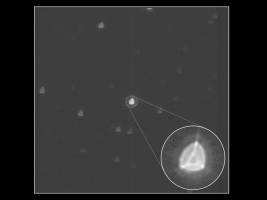
Next milestone in the commissioning of CHEOPS: After the successful opening of the space telescope cover on January 29, 2020, CHEOPS has now taken its first images of the sky. CHEOPS is a joint mission of the European Space Agency (ESA) and Switzerland, led by the University of Bern, in collaboration with the University of Geneva.
Astronomy & Space - Environment - 20.01.2020

Under the leadership of astrophysicist Kathrin Altwegg, Bernese researchers have found an explanation for why very little nitrogen could previously be accounted for in the nebulous covering of comets: the building block for life predominantly occurs in the form of ammonium salts, the occurrence of which could not previously be measured.


Event - Mar 17
CEA Leti to Showcase Integrated Expertise In Microelectronics Reliability at IRPS 2026
CEA Leti to Showcase Integrated Expertise In Microelectronics Reliability at IRPS 2026
Health - Mar 17
AI was supposed to ease doctors' workload - instead they spend hours correcting errors
AI was supposed to ease doctors' workload - instead they spend hours correcting errors
Pharmacology - Mar 17
International trial finds rapid diagnostic testing alone does not reduce antibiotic prescribing for respiratory infections
International trial finds rapid diagnostic testing alone does not reduce antibiotic prescribing for respiratory infections
Social Sciences - Mar 17
Social background shapes how hard children work, according to a study by UC3M
Social background shapes how hard children work, according to a study by UC3M
Innovation - Mar 17
With Robotics Innovation Center, CMU and Hazelwood Partners Sustain Community Collaborations
With Robotics Innovation Center, CMU and Hazelwood Partners Sustain Community Collaborations