


Event - Mar 17
CEA Leti to Showcase Integrated Expertise In Microelectronics Reliability at IRPS 2026
CEA Leti to Showcase Integrated Expertise In Microelectronics Reliability at IRPS 2026

Health - Mar 17
AI was supposed to ease doctors' workload - instead they spend hours correcting errors
AI was supposed to ease doctors' workload - instead they spend hours correcting errors


Pharmacology - Mar 17
International trial finds rapid diagnostic testing alone does not reduce antibiotic prescribing for respiratory infections
International trial finds rapid diagnostic testing alone does not reduce antibiotic prescribing for respiratory infections

Social Sciences - Mar 17
Social background shapes how hard children work, according to a study by UC3M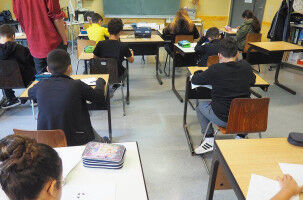
Social background shapes how hard children work, according to a study by UC3M
Innovation - Mar 17
With Robotics Innovation Center, CMU and Hazelwood Partners Sustain Community Collaborations
With Robotics Innovation Center, CMU and Hazelwood Partners Sustain Community Collaborations



news
University of Bern
Results 81 - 100 of 342.
Agronomy & Food Science - Life Sciences - 10.08.2023
Substances from corn roots influence wheat yields
Corn roots secrete certain substances that affect the quality of the soil. In certain fields, this effect increases the yield of wheat planted after corn in the same soil by more than 4%. This has been demonstrated by researchers at the University of Bern. Although the findings from several field experiments show that such effects are highly variable, they could nevertheless contribute in the long term to making the cultivation of cereals more sustainable without additional fertilizers or pesticides.
Health - Pharmacology - 24.07.2023
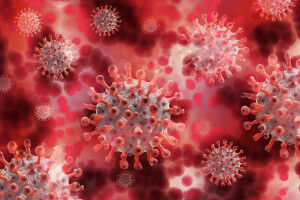
Researchers at the University of Bern have studied antibody levels against Sars-CoV-2 and their influence on infections with different variants of the virus in employees of the Bern Cantonal Police for over a year. Among other things, the results show that antibody levels offered different levels of protection depending on the variant of the virus and that police officers did not become infected with Covid-19 more frequently than the rest of the population, even though they have very frequent contact with people.
Environment - Earth Sciences - 19.07.2023
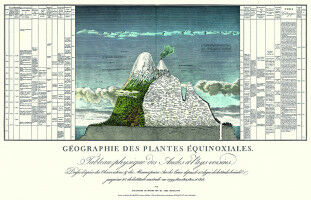
Alexander von Humboldt was a pioneer of climate research. On his voyages to America (1799-1804) and Asia (1829), he conducted meteorological measurements that he used to develop a modern, holistic model of the Earth's climate.
Environment - Health - 04.07.2023
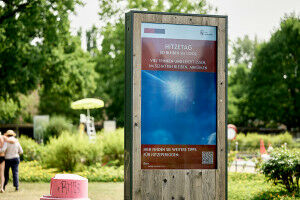
Climate change is intensifying heat, leading to a significant increase in heat-related health problems. About 60 percent of the more than 600 heat-related deaths in the summer of 2022 in Switzerland can be attributed to human-induced global warming. This is shown by a study led by the University of Bern.
Earth Sciences - Environment - 22.06.2023
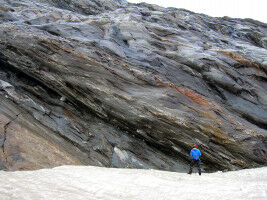
On its way towards the valley, the Aletsch glacier abruptly changes its flow direction several times. Researchers at the Institute of Geology at the University of Bern have been able to show that these changes in direction are due to so-called fault zones. The research results also show that the Alpine valleys are strongly influenced by both climate change and tectonic conditions.
Astronomy & Space - 08.06.2023
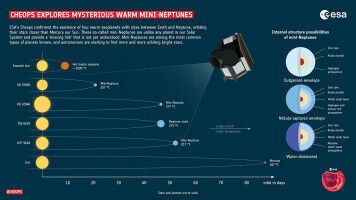
With the help of the CHEOPS space telescope an international team of European astronomers managed to clearly identify the existence of four new exoplanets. The four mini-Neptunes are smaller and cooler, and more difficult to find than the so-called Hot Jupiter exoplanets which have been found in abundance.
Health - Pharmacology - 17.05.2023
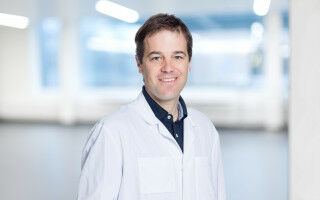
Diuretic drugs from the thiazide group have been used for 60 years to treat high blood pressure. But they also increase the risk of developing diabetes. Researchers at the University of Bern and Inselspital have now pinpointed the cause of this side effect and in the process also gained new insights into the development of diabetes.
Earth Sciences - Environment - 03.04.2023
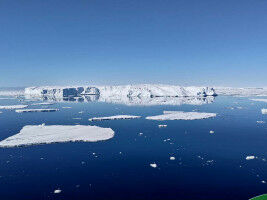
A study by the University of Bern concludes that at the end of the last ice age there was not, as previously assumed, a complete collapse of the ocean circulation in the Atlantic, which provide a mild climate in Europe. This realization has implications for the discussion on climate tipping points. The climate does not change linearly.
Physics - Astronomy & Space - 20.03.2023
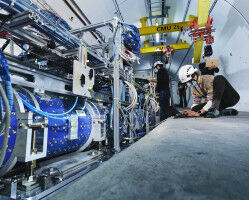
A team including physicists of the University of Bern has for the first time detected subatomic particles called neutrinos created by a particle collider, namely at CERN's Large Hadron Collider (LHC). The discovery promises to deepen scientists- understanding of the nature of neutrinos, which are among the most abundant particles in the universe and key to the solution of the question why there is more matter than antimatter.
Life Sciences - Health - 15.03.2023
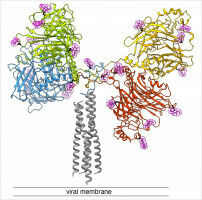
The highly contagious canine distemper virus is dangerous to dogs and wild life animals. It is also closely related to the equally highly contagious measles virus. Researchers at the University of Bern and the Zurich University of Applied Sciences have now for the first time determined the structure of the canine distemper virus "docking protein" and depicted it at molecular level.
Astronomy & Space - 09.03.2023
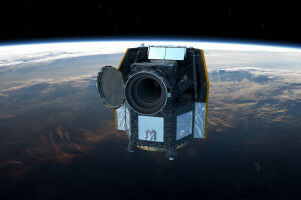
After more than three years in orbit, the mission of the CHEOPS space telescope has just been extended. Led by the University of Bern in collaboration with the University of Geneva, CHEOPS is a joint mission of the European Space Agency (ESA) and Switzerland. On March 7th, ESA-s Science Programme Committee has confirmed its continued operations to 2026 and an indicative extension to 2029, contingent upon ongoing commitments from national contributors and partners.
Life Sciences - Environment - 03.03.2023
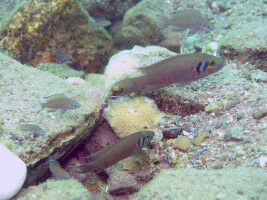
In group-living species, either the male or female offspring disperse from their natal territory at some stage. Researchers from the University of Bern and the University of Veterinary Medicine, Vienna, unveiled in African cichlids which factors determine territory inheritance and emigration. It is a widespread tradition in human agricultural populations that either sons or daughters inherit the parental property; the other gender must emigrate.
Life Sciences - 20.02.2023
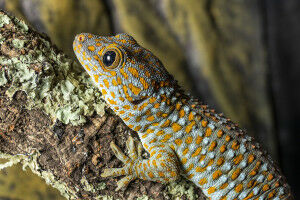
Geckos can use their tongue to differentiate their own odor from that of other members of their species, as researchers from the University of Bern have shown in a new experimental study. The findings show that geckos are able to communicate socially, meaning that they are more intelligent than was previously assumed.
Life Sciences - Environment - 09.02.2023
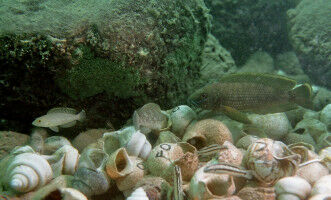
In certain Lake Tanganyika cichlids breeding in empty snail shells, there are two extreme sizes of males: giants and dwarfs. Researchers from the University of Bern and the University of Graz have analysed the genomes of these fish and found out how the peculiar sizes of males and females evolved in conjunction with the genetic sex determination mechanism.
Astronomy & Space - Chemistry - 23.01.2023

Interstellar molecular clouds are considered to be the birth sites of planetary systems. With the help of the James Webb Space Telescope, an international research team including the Center for Space and Habitability (CSH) at the University of Bern and the National Centre of Competence in Research (NCCR) PlanetS discovered the deepest and coldest ice ever detected in such a molecular cloud.
Life Sciences - Environment - 20.12.2022

A research group at the University of Bern is studying how plants "breathe". They have gained new insights into how grasses develop efficient "breathing pores" on their leaves. If important landmark components in this development process are missing, the gas exchange between plant and atmosphere is impaired.
Environment - 30.11.2022

Researchers at the University of Bern have developed a new method for the successive calculation of the emission reductions which are necessary for achieving temperature targets, such as the 2°C goal. The calculation method is based solely on observation rather than models and scenarios. According to the study, international climate policy has to become even more ambitious.
Astronomy & Space - Physics - 29.11.2022
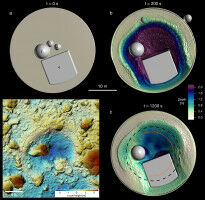
The impact experiment conducted on the asteroid Ryugu by the Japanese Hayabusa2 mission which took place two years ago resulted in an unexpectedly large crater. With the use of simulations, a team led by the University of Bern and the National Center of Competence in Research (NCCR) PlanetS has recently succeeded in gaining new insights from the experiment regarding the formation and development of asteroids.
Physics - Astronomy & Space - 09.11.2022

With the use of a precision experiment developed at the University of Bern, an international research team has succeeded in significantly narrowing the scope for the existence of dark matter. The experiment was carried out at the European Research Neutron Source at the Institute Laue-Langevin in France, and makes an important contribution to the search for these particles, of which little remains known.
Environment - Life Sciences - 07.11.2022
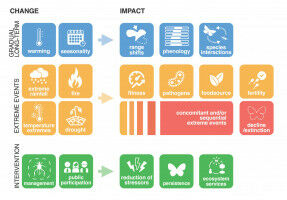
In a study, 70 researchers from 19 countries around the world call for measures to better understand and reduce the impact of climate change on insects. Otherwise, they say, the chance of a sustainable future with healthy ecosystems will be drastically reduced. The researchers also outline ways to help insects in a warming world.


Event - Mar 17
CEA Leti to Showcase Integrated Expertise In Microelectronics Reliability at IRPS 2026
CEA Leti to Showcase Integrated Expertise In Microelectronics Reliability at IRPS 2026
Health - Mar 17
AI was supposed to ease doctors' workload - instead they spend hours correcting errors
AI was supposed to ease doctors' workload - instead they spend hours correcting errors
Pharmacology - Mar 17
International trial finds rapid diagnostic testing alone does not reduce antibiotic prescribing for respiratory infections
International trial finds rapid diagnostic testing alone does not reduce antibiotic prescribing for respiratory infections
Social Sciences - Mar 17
Social background shapes how hard children work, according to a study by UC3M
Social background shapes how hard children work, according to a study by UC3M
Innovation - Mar 17
With Robotics Innovation Center, CMU and Hazelwood Partners Sustain Community Collaborations
With Robotics Innovation Center, CMU and Hazelwood Partners Sustain Community Collaborations