

Social Sciences - Today
New Research Project on African American Thought and the German Colonial Imagination
New Research Project on African American Thought and the German Colonial Imagination
Politics - Today
Researcher Carolina Moreno calls for official science communication to counter disinformation in critical periods
Researcher Carolina Moreno calls for official science communication to counter disinformation in critical periods

Health - Today
Simple screening blood test could help identify undiagnosed heart failure in people living with diabetes
Simple screening blood test could help identify undiagnosed heart failure in people living with diabetes


Economics - Today
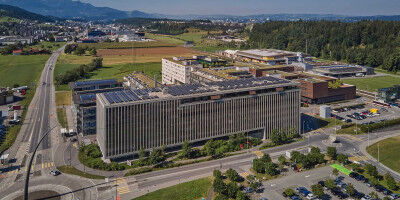
University of Glasgow and Lloyds Banking Group announce groundbreaking agentic AI research programme
University of Glasgow and Lloyds Banking Group announce groundbreaking agentic AI research programme
Astronomy & Space - Today
ANU lends its expertise in laser communications to support NASA's Artemis II crewed moon mission
ANU lends its expertise in laser communications to support NASA's Artemis II crewed moon mission


Life Sciences - Mar 27
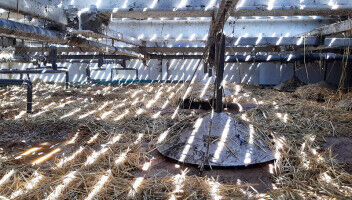
Understanding the Brain - TU Ilmenau's EU EMBRACE Project Nominated for European Excellence Award
Understanding the Brain - TU Ilmenau's EU EMBRACE Project Nominated for European Excellence Award
Social Sciences - Mar 27
A manual addresses, for the first time in Spain, child and adolescent sexual exploitation
A manual addresses, for the first time in Spain, child and adolescent sexual exploitation
Chemistry - Mar 27
The FUNIMAT team at ICMol achieves stability and flexibility in porous materials inspired by biological systems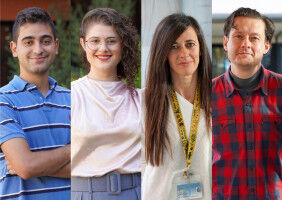
The FUNIMAT team at ICMol achieves stability and flexibility in porous materials inspired by biological systems


Environment - Mar 26
Changing vegetation in thawing permafrost increases emissions of greenhouse gases
Changing vegetation in thawing permafrost increases emissions of greenhouse gases

science wire
Materials Science
Results 1151 - 1200 of 1237.
Materials Science - Physics - 17.11.2016
Switching off vibrations
Macroscopic crystal structures can absorb unwanted vibrations or filter noise - without any electronics or electricity whatsoever.
Materials Science - Microtechnics - 27.10.2016
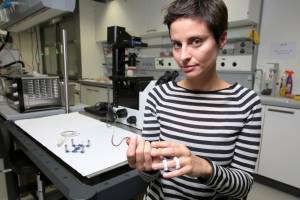
EPFL scientists have developed a new type of composite thread that varies in stiffness depending on its temperature.
Materials Science - Physics - 24.10.2016
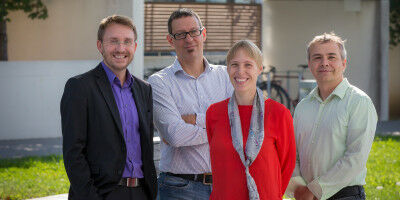
with Daniel Grolimund At the Swiss Light Source SLS, researcher Daniel Grolimund is responsible for a beamline where the arrangement of chemical bonds in different objects can be determined. These capabilities prove valuable to researchers in the most diverse disciplines: to battery researchers as well as biologists, archeologists, and many more.
Physics - Materials Science - 17.10.2016
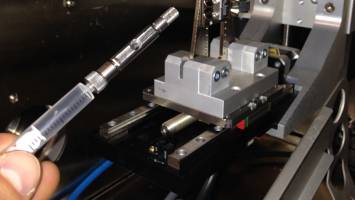
Several peptides have an antibacterial effect - but they are broken down in the human body too quickly to exert this effect.
Physics - Materials Science - 17.10.2016

A new type of atomic force microscope (AFM) uses nanowires as tiny sensors. Unlike standard AFM, the device with a nanowire sensor enables measurements of both the size and direction of forces. Physicists at the University of Basel and at the EPF Lausanne have described these results in the recent. Nanowires are extremely tiny filamentary crystals which are built-up molecule by molecule from various materials and which are now being very actively studied by scientists all around the world because of their exceptional properties.
Materials Science - Laboratory - 11.10.2016
From fibre swelling in paper by way of computer vision to efficient electric auxiliary drives: three new Christian Doppler Laboratories were launched at TU Graz in 2016.
Physics - Materials Science - 10.10.2016

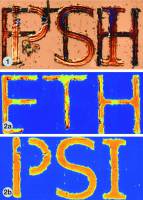
The Paul Scherrer Institute PSI was formed in 1988, in part from the Swiss Federal Institute for Reactor Research.
Materials Science - Chemistry - 06.10.2016
Nobel Prize in Chemistry: Empa involved
Transport - Materials Science - 06.10.2016
Rapidly fueled for a long range journey
Empa has launched Switzerland's first hydrogen station for passenger cars on its campus in Dübendorf.
Materials Science - Chemistry - 06.10.2016
Nobel Prize: Empa involved in research
Materials Science - Chemistry - 06.10.2016
Empa involved in Nobel research
Empa is delighted to acknowledge the awarding of the Nobel Prize in Chemistry 2016 to Bernard L. Feringa, Fraser Stoddart and Jean-Pierre Sauvage - as it made a major contribution in 2011 to a research project carried out by Bernard L. Feringa.
Physics - Materials Science - 04.10.2016
A "nano-golf course" to precisely assemble nanoparticles
The nanoparticles in the droplet encounter obstacles, they detach from the liquid and are captured by the holes©Valentin Flauraud/ 2016 EPFL 04. EPFL researchers have developed a method to place and position hundreds of thousands of nanoparticles very precisely on a one centimeter square surface. This will open new doors in nanotechnologies Whether it has to do with making pens or building space shuttles, the manufacturing process consists of creating components and then carefully assembling them.
Materials Science - Research Management - 04.10.2016

Anna Maria Coclite is the first woman to be awarded an ERC Starting Grant at TU Graz. Her research project deals with developing a hybrid material to produce an artificial skin with multi-responsive sensors.
Astronomy & Space - Materials Science - 30.09.2016

Rosetta's mission is over: After the last signal at 13:20, the spacecraft was crash-landed on comet Churyumov-Gerasimenko, with the ROSINA instrument from Bern taking measurements right until the very end.
Materials Science - Environment - 30.09.2016
Rubidium pushes perovskite solar cells to 21.6% efficiency
30. EPFL scientists have stabilized perovskite solar cells by integrating rubidium into them. The innovation pushes power-conversion efficiency to 21.6%, ushering a new generation of perovskite solar cells.
Astronomy & Space - Materials Science - 09.08.2016
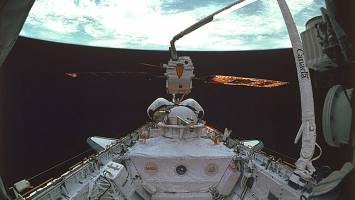
The much-travelled European research satellite Eureca was taken from the aerospace exhibition in the Swiss Museum of Transport in Lucerne and loaded onto a truck before setting off on yet another adventure.
Materials Science - Health - 21.07.2016
From high-end products for aerospace and engines to power plant construction and medical engineering - electron beam technology is an innovative method that straddles the border between basic research and application.
Materials Science - Chemistry - 04.07.2016

Materials researchers at the Swiss Paul Scherrer Institute PSI in Villigen and the ETH Zurich have developed a very simple and cost-effective procedure for significantly enhancing the performance of conventional Li-ion rechargeable batteries.
Physics - Materials Science - 30.06.2016
The interplay between adhesion and
An international team of researchers headed by the University of Zurich and with participation of Empa has developed a system that enables them to electrically switch back and forth between adhesion and stiction (static friction) of a water drop on a solid surface.
Chemistry - Materials Science - 29.06.2016
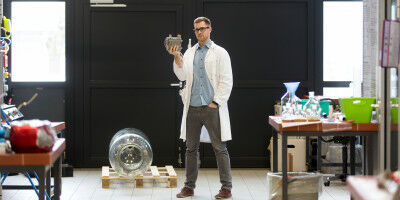
The direct and efficient conversion of chemically stored energy into electrical energy using fuel cells requires durable, corrosion-resistant and electrochemically highly active materials.
Chemistry - Materials Science - 15.06.2016
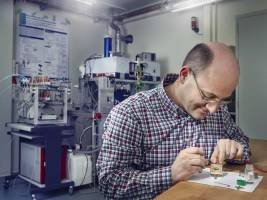
An ingenious measurement chamber Natural-gas vehicles are on the way, and they need catalytic converters for the exhaust too. So far, catalytic converters for gasoline-powered vehicles have been modified to fill this gap; however, these are not geared towards removing the climate-harmful methane that the exhaust from natural-gas vehicles contains.
Materials Science - 15.06.2016
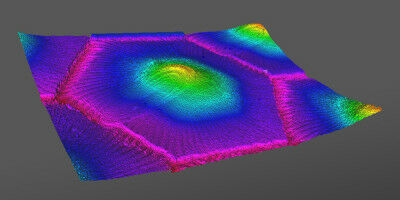
Subduction controls the distribution and fragmentation of Earth’s tectonic plates
Numerical simulation of the movement of the mantle and the surface of a virtual Earth. The boundaries of the calculated surface plates are white.
Physics - Materials Science - 14.06.2016

Fritz Prinz from Stanford University wants to convert and store energy more efficiently using new materials and methods.
Materials Science - 08.06.2016
Instruments with Empa knowledge in space
Physics - Materials Science - 27.05.2016
L’EPFL a décroché 50 millions d’euros de «grants» malgré les écueils
27. La course aux «ERC Grants» a souri à l'EPFL ces deux dernières années. Entre 2014 et 2015, onze chercheurs ont reçu un «Advanced grant» dans le cadre du programme «Horizon 2020». Ils obtiendront chacun un financement de l'ordre de 2,5 millions d'euros sur cinq ans. C'est peut-être une forme de baroud d'honneur, tant l'avenir de la participation de la Suisse aux programmes de recherche et de financement européens est incertain.
Physics - Materials Science - 27.05.2016
Nearly 50 million euros of ERC grants for EPFL, despites obstacles
27. EPFL fared well in the competition for European Research Council (ERC) grants in 2014 and 2015 within the Horizon 2020 framework, with 11 researchers winning an Advanced Grant. That translates into 2.5 million euros over five years for each of them. This may be Switzerland's last stand, since its eligibility for European research and funding programs is in jeopardy.
Materials Science - Innovation - 24.05.2016
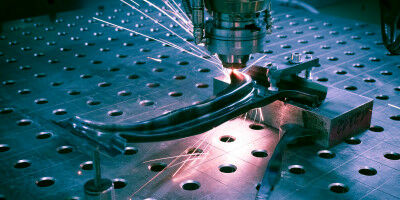
Materials research as a foundation for innovative products. More than 1,200 experts in high-performance materials of the future are coming to Graz for the THERMEC convention starting on 29 May.
Materials Science - 13.05.2016
Three of a kind
Materials Science - Innovation - 04.05.2016
Using nanostructured filters to reduce shipping pollution
04. Cargo ships are among the leading sources of pollution on the planet. Starting in 2020, however, stricter sulfur emission standards will take effect.
Materials Science - Health - 21.04.2016
Asphalt’s miraculous cure
Empa scientists have developed a technique that can repair old, cracked asphalt. They got their inspiration from a method used in cancer treatment based on nanoparticles.
Materials Science - Innovation - 13.04.2016
Opening of Empa’s Coating Competence
At Empa's new Coating Competence Center, which has just opened, tailor-made surface technologies find their way from the research labs to marketable industrial applications.
Physics - Materials Science - 07.04.2016
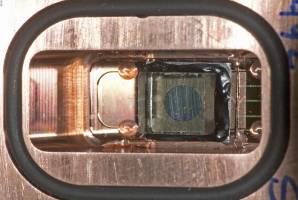
Los Alamos and Sandia National Laboratories have recently conducted plutonium experiments using Sandia's pulsed power Z Machine. "With Z we have very carefully reached pressure, temperature and density regimes that are relevant to those seen during a nuclear weapon detonation," said Russell Olson.
Materials Science - Electroengineering - 06.04.2016
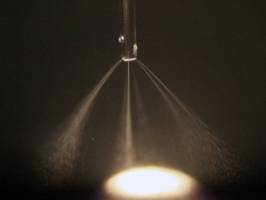
Researchers of the University of Basel and Empa have gotten a step closer to engineering artificial muscles: they have developed a method to generate nanometer-thin silicone films.
Materials Science - Electroengineering - 05.04.2016
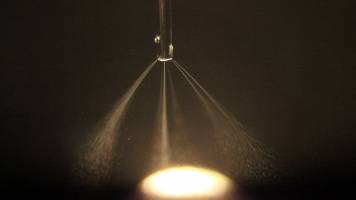
Researchers from Empa and the University of Basel have developed a new method of electrospraying which enables artificial muscles to be fabricated from nanometer-thin silicone layers.
Materials Science - 05.04.2016
Wood with additional functions
Wood is robust and versatile. But even the best material has its limits. Empa researchers are thus looking to transform wood into a high-tech material and broaden the range of applications for this natural resource. The trick: they give wood additional, unexpected properties. Over the millennia, our ancestors have improved the properties of wood by developing varnishes, paints or other methods.
Materials Science - Life Sciences - 05.04.2016
Germs don’t stand a chance
Enzymes from fungi, bacteria and plants render wood resistant to decomposing and pathogenic microorganisms.
Materials Science - Environment - 05.04.2016
Reaching for the sun
Wood has one particular property that tends to cause problems: it swells when it gets wet. As this occurs according to strict rules, however, a team of Empa researchers is looking to produce wooden building components that move automatically.
Materials Science - Environment - 05.04.2016
Fireproof hybrid wood
For centuries, wood has been a popular light, solid building material. Moreover, it is a renewable and easily recyclable raw material - with one drawback: wood burns. But this doesn't necessarily have to be that way, as researchers from Empa demonstrate. Ecological construction is all the rage. Aspects such as the sustainability and energy efficiency of buildings are crucial.
Materials Science - Environment - 05.04.2016
Skyscrapers made of bamboo concrete
Bamboo is a feat of nature. After all, this member of the grass family contains fibers that are as strong as steel.
Physics - Materials Science - 04.04.2016
The beaming Italian
About 18 months ago, Davide Bleiner took over the helm at Empa's Laboratory for Advanced Analytical Technologies.
Materials Science - Environment - 01.04.2016
Patrick Wäger becomes head of laboratory
There will be a new face at the helm of the Empa "Technology and Society" laboratory, with Patrick Wäger heading up the department from May 2016.
Materials Science - Environment - 31.03.2016
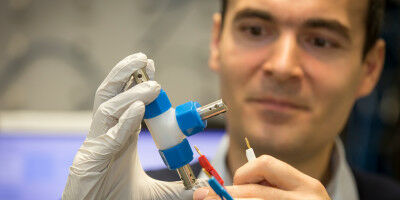
In the FFG project SolaBat, TU Graz is entering almost new research territory. Photovoltaic cells are to be combined into one device with electrochemical energy storage systems.
Life Sciences - Materials Science - 22.03.2016

Proteins are important indicators in diagnosing diseases. A young ETH researcher has developed a method by which it is possible to test minute amounts of blood for different proteins in parallel. He has received an ETH Zurich Pioneer Fellowship for his work. Together with a fellow student, he wants to turn his test into a marketable product.
Music - Materials Science - 11.03.2016
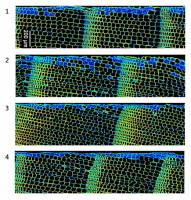
Varnishes protect works of art and wooden instruments from environmental damage. However, until recently, little research had been carried out into the effects of varnish on the sound of violins. Empa researchers have now investigated this relationship and have published their initial findings. Leonardo da Vinci's oil painting "Mona Lisa" looks rather gloomy with its dark green and brown colours.
Materials Science - Chemistry - 04.03.2016
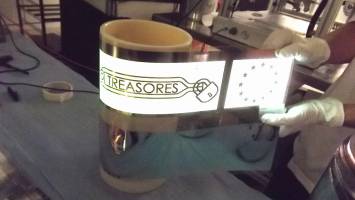
In more than three years of work european scientists finally made future lighting technology ready to market. They developed flexible lighting foils that can be produced roll-to-roll - much like newspapers are printed. These devices pave the path towards cheaper solar cells and LED lighting panels. The project named TREASORES was led by Empa scientist Frank Nüesch and combined knowhow from nine companies and six research institutes in five european countries.
Transport - Materials Science - 22.02.2016
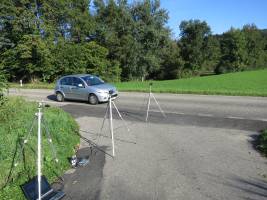
Noise is disturbing and can be harmful to health. Empa researchers have now succeeded in simulating road noise by means of «auralisation». The aim is to make noise audible along traffic routes that are merely in the planning stage - and thus include countermeasures at the same time. Auralisation is understood as making audible those sound events that will only occur in the future.
Materials Science - Environment - 27.01.2016
Undoped silicon makes simpler, cheaper but efficient solar cells
27. A group of international researchers led by Berkeley scientists create a high-efficiency silicon device in seven steps. The core part of the prototypes have been built at EPFL's Photovoltaics Lab, led by Christophe Ballif, in Neuchâtel. Researchers have simplified the steps to create silicon solar cells that convert sunlight to electricity with high efficiency by applying a new mix of materials to a standard design.
Materials Science - 19.01.2016
Win an Empa Calendar 2016
Materials Science - 13.01.2016
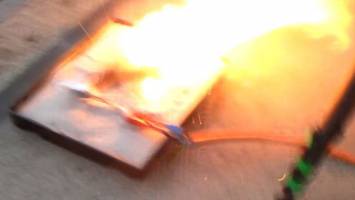
The major fire in Steckborn on December 21, 2015, was probably started by a lithium polymer battery in a model car, as the Thurgau cantonal police department recently announced.
Physics - Materials Science - 08.12.2015
Appointments at EPFL
08. The Board of the Swiss Federal Institutes of Technology has announced the appointment of four professors at EPFL. Jürgen Brugger as Full Professor of Microtechnology in the School of Engineering (STI) Jürgen Brugger is an innovator in the field of microsystems. His research focuses in particular on microand nano-manufacturing techniques as well as on the integration of novel functional materials such as microlenses and conductive inks into the latest generation of microsystems.


Social Sciences - Today
New Research Project on African American Thought and the German Colonial Imagination
New Research Project on African American Thought and the German Colonial Imagination
Politics - Today
Researcher Carolina Moreno calls for official science communication to counter disinformation in critical periods
Researcher Carolina Moreno calls for official science communication to counter disinformation in critical periods
Health - Today
Simple screening blood test could help identify undiagnosed heart failure in people living with diabetes
Simple screening blood test could help identify undiagnosed heart failure in people living with diabetes
Economics - Today
University of Glasgow and Lloyds Banking Group announce groundbreaking agentic AI research programme
University of Glasgow and Lloyds Banking Group announce groundbreaking agentic AI research programme
Astronomy & Space - Today
ANU lends its expertise in laser communications to support NASA's Artemis II crewed moon mission
ANU lends its expertise in laser communications to support NASA's Artemis II crewed moon mission
Life Sciences - Mar 27
Understanding the Brain - TU Ilmenau's EU EMBRACE Project Nominated for European Excellence Award
Understanding the Brain - TU Ilmenau's EU EMBRACE Project Nominated for European Excellence Award
Social Sciences - Mar 27
A manual addresses, for the first time in Spain, child and adolescent sexual exploitation
A manual addresses, for the first time in Spain, child and adolescent sexual exploitation
Chemistry - Mar 27
The FUNIMAT team at ICMol achieves stability and flexibility in porous materials inspired by biological systems
The FUNIMAT team at ICMol achieves stability and flexibility in porous materials inspired by biological systems
Environment - Mar 26
Changing vegetation in thawing permafrost increases emissions of greenhouse gases
Changing vegetation in thawing permafrost increases emissions of greenhouse gases