

Politics - Today
Argentina 50 years on from start of dictatorship - is it forgetting the disappeared?
Argentina 50 years on from start of dictatorship - is it forgetting the disappeared?
Life Sciences - Today
Courting the Competition: Some Male Fruit Flies Serenade Each Other Rather Than Fight
Courting the Competition: Some Male Fruit Flies Serenade Each Other Rather Than Fight
Social Sciences - Today
Louis Theroux's manosphere documentary shows some of the subtle ways we can undermine online misogyny
Louis Theroux's manosphere documentary shows some of the subtle ways we can undermine online misogyny
Pharmacology - Mar 19
GSK, University of Oxford and Imperial College London launch centre to create computer models of lungs, liver, kidneys and cartilage
GSK, University of Oxford and Imperial College London launch centre to create computer models of lungs, liver, kidneys and cartilage
Innovation - Mar 19
India's new wave of Hindu Religious Entrepreneurship is reshaping our interpretation of success
India's new wave of Hindu Religious Entrepreneurship is reshaping our interpretation of success


Pharmacology - Mar 19
Oxford University spinout Dark Blue Therapeutics acquired to advance leukaemia treatment
Oxford University spinout Dark Blue Therapeutics acquired to advance leukaemia treatment

Veterinary - Mar 19
New RVC study challenges common beliefs on desirable behaviours in designer 'Doodle' crossbreeds
New RVC study challenges common beliefs on desirable behaviours in designer 'Doodle' crossbreeds
Agronomy & Food Science - Mar 19
Bird Flu Risk to Danish Cattle - New Tool Can Warn Farmers Before Infection Spreads
Bird Flu Risk to Danish Cattle - New Tool Can Warn Farmers Before Infection Spreads
Chemistry - Mar 19
Leipzig University and Center for the Transformation of Chemistry conclude collaboration agreement
Leipzig University and Center for the Transformation of Chemistry conclude collaboration agreement


news
Friedrich Miescher Institute for Biomedical Research
Results 81 - 100 of 103.
Life Sciences - 14.01.2019
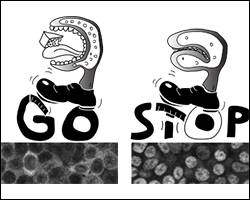
Upon exit from self-renewal, embryonic stem cells differentiate into different types of tissues - a process regulated by various complex mechanisms. Recent work published by the Betschinger group shows the importance of the lysosome - which is directly associated with cellular metabolism and nutrition - in developmental progression.
Physics - Life Sciences - 02.01.2019

Our cutting-edge technology platforms are key enablers of research at the FMI. One of the biggest of these, with the largest number of users, is the Facility for Advanced Imaging and Microscopy (FAIM). To find out more about the facility, and microscopy in general, we spoke to the joint heads of FAIM - Christel Genoud, who is responsible for Electron Microscopy, and Laurent Gelman, responsible for Light Microscopy.
Life Sciences - Health - 17.12.2018

For more than 100 years, biologists have known that cells contain various kinds of membraneless organelles and conjectured what organizing principles underlie them. During the past decade, liquid-liquid phase separation has emerged as one of the concepts that can explain these cellular structures. Phase separation has become an increasingly hot topic, as it can be related to pathologies such as neurodegenerative diseases.
Life Sciences - Health - 05.12.2018
Whole-brain imaging of mice during behavior
In a study published in Neuron, researchers have demonstrated how functional ultrasound imaging can yield high-resolution, unbiased, brain-wide activity maps of behaving mice. These can lead to a brain-wide understanding of how brain activity relates to specific behavior - in healthy mice and in mouse models of neurologic or psychiatric diseases.
Life Sciences - Pharmacology - 05.11.2018
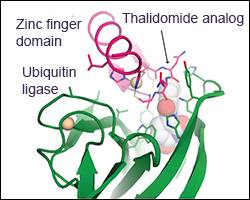
Nicolas Thomä's group at the FMI has joined forces with the group of Benjamin Ebert at Harvard's Broad Institute to show how thalidomide analogs mediate degradation of many more proteins than previously anticipated. These proteins - zinc finger transcription factors - play a role in cancer and developmental diseases but are difficult drug targets.
Life Sciences - 09.10.2018
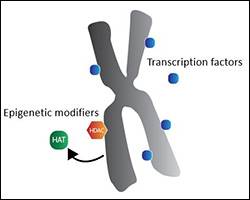
Differential recruitment of proteins to chromatin is fundamental in eukaryotes to regulate transcription, replication, and cell division. Yet it is unclear how the regulatory landscape is transmitted through cell division since many proteins are thought to be evicted during mitosis, when the chromosomes condensate.
Life Sciences - Health - 04.09.2018
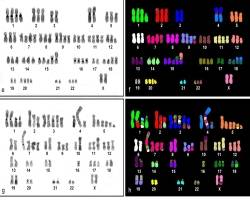
Work published by Isabella Marcomini and the Gasser laboratory sheds light on how repeat sequences found in the DNA of eukaryotic genomes can prevent accurate repair of DNA breaks, leading to dangerous chromosomal rearrangements. Repeat sequences make up nearly 70% of the human genome. While their function is unclear, it is well established that repeats are a source of genomic instability.
Life Sciences - Health - 02.08.2018
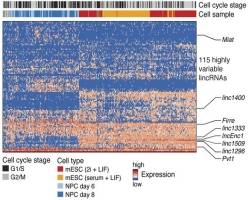
A group of researchers coordinated by Alex Tuck from Marc Bühler's lab wanted to learn more about the role of long non-protein-coding RNAs (lncRNAs); these eukaryotic RNAs lacking protein-coding potential were first described about 15 years ago, but still little is known about their biological significance.
Health - Life Sciences - 22.06.2018
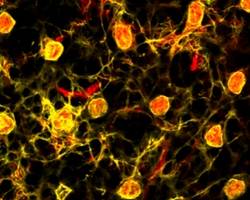
As machine learning and artificial intelligence develop, eye diseases will soon be described in terms of the perturbations of computations performed by the retina. An international team of scientists developed a model of the retina that can predict with high precision the outcome of a defined perturbation - an important step towards a computer model of the retina that can predict the outcome of retinal diseases.
Life Sciences - Health - 13.06.2018
FMI incubator lab: Translating fundamental discoveries to potential application
At the beginning of March, the FMI opened an incubator lab to further support the translation of fundamental discoveries to potential application. Currently, two former FMI PhD students, who are in close contact with the Biozentrum of the University of Basel, develop an idea for biomedical translation based on their research results on DNA repair.
Life Sciences - Health - 23.05.2018
New findings on autism-related disorder
In a study published today in Nature, Marc Bühler and his group at the Friedrich Miescher Institute for Biomedical Research (FMI) have taken a major step forward in elucidating the mechanisms underlying a disorder known as Helsmoortel-Van der Aa syndrome. They clarify the role played by ADNP - a protein whose gene is mutated in patients with the syndrome - in the formation of tissues during embryonic development.
Life Sciences - 03.05.2018
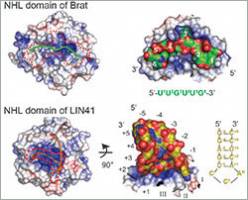
In close collaboration, scientists from the groups of Rafal Ciosk and Helge Grosshans, and the protein structure and computational biology platforms, elucidated the RNA binding rules of LIN41, an important developmental regulator of the self-renewal versus differentiation decision. Interactions between RNA and proteins impact all aspects of RNA metabolism.
Health - 23.03.2018
Breakthrough article on mechanistic features of microRNA targeting and activity
Giovanna Brancati and Helge Grosshans from the FMI have described target specialization of miRNAs of the let-7 family. They identified target site features that determine specificity, and revealed that specificity can be modulated in a manner that allows cells to integrate target site quality and miRNA abundance.
Life Sciences - Pharmacology - 26.03.2015
How genes are permanently silenced by small RNAs
Researchers have elucidated the mechanism underlying small RNA-mediated gene silencing, thus solving a mystery which has been puzzling the research community for over a decade. Back in 2002, the discovery by several research groups that small RNA molecules can shut down clearly defined genome regions was hailed by Science as the Breakthrough of the Year.
Life Sciences - 20.03.2015
A spotlight on protein translation
Researchers have developed a sophisticated technique that makes it possible to monitor the precise time and place of the first translation event within a cell. This novel method, known as TRICK, is described and initial results are reported in Science today. For the fate of a cell, it is crucial what proteins are produced, at what time and in what part of a cell.
Life Sciences - Computer Science - 09.03.2015
Learning like machines
Neurobiologists have shown that neurons critical for learning can be divided into two subpopulations with different functions. Almost as if learning processes in the brain mimicked machine learning, one subpopulation is responsible for collecting a broad range of potentially relevant information, while the second subsequently helps to consolidate a successful strategy.
Life Sciences - Pharmacology - 17.07.2014

Scientists have clarified the workings of thalidomide at the molecular level. Their analysis of various structures indicates that the drug can interfere with cellular processes in two different ways-once preventing and once promoting protein degradation-thus explaining its diverse clinical effects. In the early 1960s, thalidomide - a drug widely prescribed at that time as a sedative and for the treatment of morning sickness in pregnancy - became notorious when it was found to cause birth defects.
Health - Life Sciences - 04.07.2014
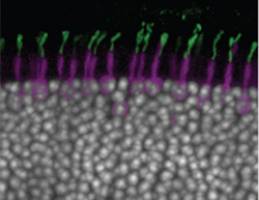
Scientists have resolved the mechanism controlling the maintenance of the light detectors - the cone photoreceptor outer segments - in the retina. With this knowledge, they have been able to induce the formation of functional photoreceptors in cultured retinas derived from embryonic stem cells. This opens up exciting new avenues for the study and treatment of blindness.
Life Sciences - 10.04.2014
A brain area responsible for grasping
A research has shown that limb motor control is regulated by a selective synaptic connectivity matrix between the brainstem and the spinal cord. In particular, the researchers have pinpointed a brainstem area responsible for the control of grasping. This is the first time it has been possible to link defined neuronal circuit elements unequivocally to a specific phase of movement.
Life Sciences - 17.01.2014
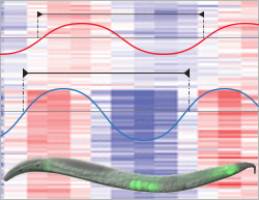
Development of the nematode C. elegans is directed by rhythmic patterns of protein production. As researchers have shown, oscillations with an 8-hour period occur across a wide variety of tissues, structures, cells and genes. The extent of the phenomenon suggests that the process involved could be a fundamental mechanism in the development of many organisms .


Politics - Today
Argentina 50 years on from start of dictatorship - is it forgetting the disappeared?
Argentina 50 years on from start of dictatorship - is it forgetting the disappeared?
Life Sciences - Today
Courting the Competition: Some Male Fruit Flies Serenade Each Other Rather Than Fight
Courting the Competition: Some Male Fruit Flies Serenade Each Other Rather Than Fight
Social Sciences - Today
Louis Theroux's manosphere documentary shows some of the subtle ways we can undermine online misogyny
Louis Theroux's manosphere documentary shows some of the subtle ways we can undermine online misogyny
Pharmacology - Mar 19
GSK, University of Oxford and Imperial College London launch centre to create computer models of lungs, liver, kidneys and cartilage
GSK, University of Oxford and Imperial College London launch centre to create computer models of lungs, liver, kidneys and cartilage
Innovation - Mar 19
India's new wave of Hindu Religious Entrepreneurship is reshaping our interpretation of success
India's new wave of Hindu Religious Entrepreneurship is reshaping our interpretation of success
Pharmacology - Mar 19
Oxford University spinout Dark Blue Therapeutics acquired to advance leukaemia treatment
Oxford University spinout Dark Blue Therapeutics acquired to advance leukaemia treatment
Veterinary - Mar 19
New RVC study challenges common beliefs on desirable behaviours in designer 'Doodle' crossbreeds
New RVC study challenges common beliefs on desirable behaviours in designer 'Doodle' crossbreeds
Agronomy & Food Science - Mar 19
Bird Flu Risk to Danish Cattle - New Tool Can Warn Farmers Before Infection Spreads
Bird Flu Risk to Danish Cattle - New Tool Can Warn Farmers Before Infection Spreads
Chemistry - Mar 19
Leipzig University and Center for the Transformation of Chemistry conclude collaboration agreement
Leipzig University and Center for the Transformation of Chemistry conclude collaboration agreement