




Health - Today
AI was supposed to ease doctors' workload - instead they spend hours correcting errors
AI was supposed to ease doctors' workload - instead they spend hours correcting errors



Pharmacology - Today
International trial finds rapid diagnostic testing alone does not reduce antibiotic prescribing for respiratory infections
International trial finds rapid diagnostic testing alone does not reduce antibiotic prescribing for respiratory infections

Social Sciences - Today
Social background shapes how hard children work, according to a study by UC3M
Social background shapes how hard children work, according to a study by UC3M
Innovation - Today
With Robotics Innovation Center, CMU and Hazelwood Partners Sustain Community Collaborations
With Robotics Innovation Center, CMU and Hazelwood Partners Sustain Community Collaborations





news
History & Archeology
Results 341 - 360 of 979.
History & Archeology - Agronomy & Food Science - 06.06.2022
Chickens for life not just for dinner
Chickens were introduced to Britain, mainland Europe, and Northern Africa later than previously thought, and were primarily regarded as exotica not food, new research suggests. The study, led by Cardiff University and published in the journal Antiquity is one of two papers published today which together, transform our understanding of how humans' relationship with the popular poultry has evolved over time.
History & Archeology - 02.06.2022

In Colmar, the Inrap is excavating the cathedral square and uncovering the old cemetery of the Saint-Martin collegiate church. The initial research provided first-rate information on the population of Colmar in the medieval period. In the heart of the city, the redevelopment project of the Cathedral Square, carried by the City of Colmar, has motivated the prescription of a preventive archaeological excavation by the State (Drac Grand-Est).
Life Sciences - History & Archeology - 02.06.2022

Modern humans are characterized by their prosociality, a broad term that encompasses intraspecies empathy, social tolerance, cooperation and altruism. These facets of social cognition have been associated with variations in the oxytocin and vasotocin genes (OT and VT) and their receptors (OTR and VTR).
History & Archeology - Life Sciences - 02.06.2022

Research at the University of Vienna could solve mystery of human evolution Using the latest scientific methods, Tom Higham and Katerina Douka from the University of Vienna want to solve a great mystery of human evolution: Why are we the only humans left? Higham and Douka were the first ones to find a first-generation offspring of two different types of human.
History & Archeology - Environment - 30.05.2022
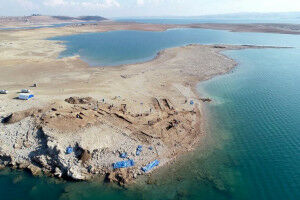
A team of German and Kurdish archaeologists have uncovered a 3400-year-old Mittani Empire-era city once located on the Tigris River. The settlement emerged from the waters of the Mosul reservoir early this year as water levels fell rapidly due to extreme drought in Iraq. The extensive city with a palace and several large buildings could be ancient Zakhiku - believed to have been an important center in the Mittani Empire (ca. BC).
History & Archeology - Art & Design - 27.05.2022
More than ten artistic manifestations between 1338 and 1538 spawned the myth of James I as the founding king
Francesc Granell Sales, a researcher at the University of Valencia, has analysed the representation of King James I in visual culture during the period 1338-1538.
History & Archeology - Innovation - 25.05.2022
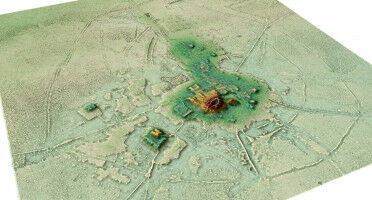
Archaeologists reveal pre-Hispanic cities in Bolivia with laser technology LIDAR Several hundred settlements from the time between 500 and 1400 AD lie in the Bolivian Llanos de Mojos savannah and have fascinated archaeologists for years. Researchers from the German Archaeological Institute, the University of Bonn and the University of Exeter have now visualized the dimensions of the largest known settlement of the so-called Casarabe culture.
History & Archeology - 17.05.2022

German and Egyptian researchers have uncovered a series of colourful ceiling paintings in the temple of Esna in Upper Egypt. As Professor Christian Leitz of the University of Tübingen reported, the relief-like images of the central ceiling section are a total of 46 depictions of the Upper Egyptian crown goddess Nechbet and the Lower Egyptian crown goddess Wadjet.
History & Archeology - 17.05.2022

In the Temple of Khnum at Esna, Upper Egypt, German and Egyptian researchers have uncovered a series of vibrantly-colored ceiling frescoes. The relief images in the central section of the ceiling, Professor Christian Leitz from the University of Tübingen reports, make up a total of 46 depictions of the Upper-Egyptian vulture goddess Nekhbet and the Lower-Egyptian serpent goddess Wadjet.
Life Sciences - History & Archeology - 13.05.2022

New study published in the journal Cell The genetic origins of the first agriculturalists in the Neolithic period long seemed to lie in the Near East. A new study published in Cell shows that the first farmers actually represented a mixture of Ice Age hunter-gatherer groups, spread from the Near East all the way to south-eastern Europe.
History & Archeology - Life Sciences - 03.05.2022

New research reveals how the black rat colonised Europe in the Roman and Medieval periods New ancient DNA analysis has shed light on how the black rat, blamed for spreading Black Death, dispersed across Europe - revealing that the rodent colonised the continent on two occasions in the Roman and Medieval periods.
Environment - History & Archeology - 26.04.2022

A multidisciplinary research team from the Max Planck Institute for Evolutionary Anthropology in Leipzig, the Friedrich Alexander University Erlangen-Nuremberg, the Leuphana University Lüneburg, the Leibniz Institute for Applied Geophysics and other partner institutions investigated whether Neanderthals were well adapted to life in the cold or preferred more temperate environmental conditions.
Environment - History & Archeology - 14.04.2022

A research team from the Department of Prehistory, Archaeology and Ancient History of the University of Valencia (UV) led by Professor Aleix Eixea, in collaboration with the University of Alicante (UA), the Bizkaiko Arkeologi Museoa and the Institut des Sciences de l'Evolution of France have discovered and dated in Aspe (Alicante) an open-air Neanderthal habitat over 120,000 years old in the Natural Park of Los Aljezares.
History & Archeology - Life Sciences - 01.04.2022

Multidisciplinary research team sheds light on the 1,400-year-old mystery about the genetic origins of the Avar elite Less known than Attila's Huns, the Avars were their more successful successors. They ruled much of Central and Eastern Europe for almost 250 years. We know that they came from Central Asia in the sixth century CE, but ancient authors and modern historians debated their provenance.
History & Archeology - Earth Sciences - 16.03.2022
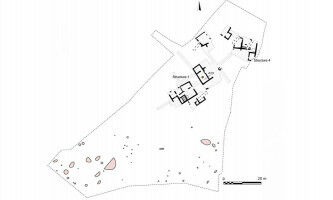
The archaeology of the Roman period has traditionally been focused on monumental aspects, but very little is known about what the daily life of peasantry was like. An investigation by the Universidad Carlos III de Madrid (UC3M) delves into the life of peasant settlements based on the archaeological findings discovered in the Community of Madrid, in the numerous rescue excavations that were carried out during the real estate bubble period.
History & Archeology - 02.03.2022

There is no other place where so many Neolithic pile dwellings have been uncovered as around the Alps. It is a mystery, however, how this -building boom- came to be. Researchers at the University of Basel have now uncovered new clues, and say that settlers at Lake Varese in northern Italy may have played a leading role.
History & Archeology - Earth Sciences - 28.02.2022

New research method shows that the material likely comes from northern Italy The almost 11 cm high figurine from Willendorf is one of the most important examples of early art in Europe. It is made of a rock called "oolite" which is not found in or around Willendorf.
History & Archeology - 11.02.2022

Arts & Humanities Erik Rolfsen New research published today in the Journal of Archaeological Science Reports reveals how archaeologists can determine when a pot was used by Romans as a portable toilet, known as a chamber pot. "Conical pots of this type have been recognized quite widely in the Roman Empire and in the absence of other evidence they have often been called storage jars.
Environment - History & Archeology - 01.02.2022

Research team detects early Stone Age settlement during dry periods 210,000 years ago An international team of researchers from the Sharjah Archaeology Authority/United Arab Emirates (UAE) and the Universities of Tübingen and Freiburg as well as Oxford Brookes/England led by Dr. Knut Bretzke from the University of Tübingen and Frank Preusser from the Institute of Earth and Environmental Sciences at the University of Freiburg has uncovered
Architecture & Buildings - History & Archeology - 07.01.2022

Scientists have studied the unique features of the decorative vaulting known as muqarnas in Spain's Alhambra palace and fortress complex. Muqarnas are commonly found in Islamic architecture, yet they are poorly understood by the architectural community and the little data that exist on them have been simplified over time.


Health - Today
AI was supposed to ease doctors' workload - instead they spend hours correcting errors
AI was supposed to ease doctors' workload - instead they spend hours correcting errors
Pharmacology - Today
International trial finds rapid diagnostic testing alone does not reduce antibiotic prescribing for respiratory infections
International trial finds rapid diagnostic testing alone does not reduce antibiotic prescribing for respiratory infections
Social Sciences - Today
Social background shapes how hard children work, according to a study by UC3M
Social background shapes how hard children work, according to a study by UC3M
Innovation - Today
With Robotics Innovation Center, CMU and Hazelwood Partners Sustain Community Collaborations
With Robotics Innovation Center, CMU and Hazelwood Partners Sustain Community Collaborations