


Event - Mar 17
CEA Leti to Showcase Integrated Expertise In Microelectronics Reliability at IRPS 2026
CEA Leti to Showcase Integrated Expertise In Microelectronics Reliability at IRPS 2026
Health - Mar 17
AI was supposed to ease doctors' workload - instead they spend hours correcting errors
AI was supposed to ease doctors' workload - instead they spend hours correcting errors


Pharmacology - Mar 17
International trial finds rapid diagnostic testing alone does not reduce antibiotic prescribing for respiratory infections
International trial finds rapid diagnostic testing alone does not reduce antibiotic prescribing for respiratory infections

Social Sciences - Mar 17
Social background shapes how hard children work, according to a study by UC3M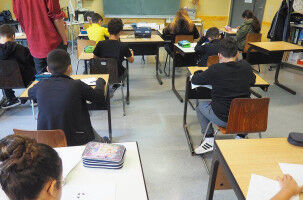
Social background shapes how hard children work, according to a study by UC3M
Innovation - Mar 17
With Robotics Innovation Center, CMU and Hazelwood Partners Sustain Community Collaborations
With Robotics Innovation Center, CMU and Hazelwood Partners Sustain Community Collaborations


news
University of Bern
Results 261 - 280 of 342.
Life Sciences - Health - 11.06.2018
Until now, it was thought that multiple brain areas were needed to control sleep and wakefulness. Neuroscientists from Bern have now identified one single control center for the sleep-wake cycle in the brain. The findings are of great importance for finding new sleep therapies. Every night we spend several hours asleep and every morning we awaken to go about our lives.
Life Sciences - 23.05.2018
The path to success in fish sperm
In many animals, males pursue alternative tactics when competing for the fertilization of eggs. Some cichlid fishes from Lake Tanganyika breed in empty snail shells, which may select for extremely divergent mating tactics. A recent study at the Institute of Ecology and Evolution of the University of Bern shows that different male types within a species produce divergent sperm, specializing either in speed or longevity.
Astronomy & Space - 21.05.2018
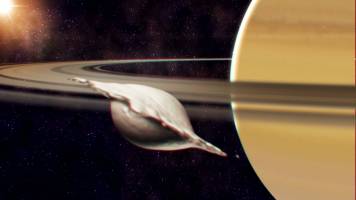
The small inner moons of Saturn look like giant ravioli and spaetzle. Their spectacular shape has been revealed by the Cassini spacecraft. For the first time, researchers of the University of Bern show how these moons were formed. The peculiar shapes are a natural outcome of merging collisions among similar-sized little moons as computer simulations demonstrate.
Astronomy & Space - Environment - 18.05.2018
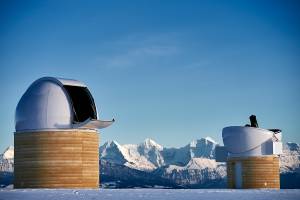
The Astronomical Institute of the University of Bern (AIUB) has extended its observatory in Zimmerwald with two additional domed structures, and has renovated a dome. As a result, there are now six fully automated telescopes available for observation and specifically for detecting and cataloguing space debris.
Life Sciences - Social Sciences - 14.05.2018
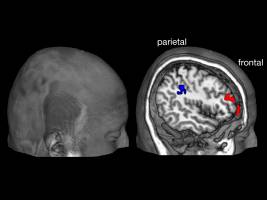
Being spoilt for choice can be a burden or a blessing: People value their freedom of choice differently. Whereas some people happily let others make decisions for them, others might rebel against restrictions of their freedom of choice. Scientists from the University of Bern have now been able to explain the individual attitude toward freedom of choice based on brain activations.
Innovation - Career - 02.05.2018
Low Self-Control Influences Smartphone Use
The wide use of smartphones in our working and private lives has led to an unprecedented level of networking between people. Aside from the possibilities that the smartphone offers, there are also side-effects such as distraction while driving or at work. Bern researchers now show that differences in personality in our capacity for self-control can explain whether people react immediately to smartphone signals.
Earth Sciences - 27.04.2018
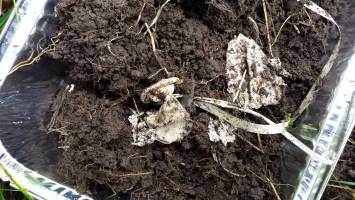
It is one of the first research projects into the existence of microplastics in the soil: Scientists at the University of Bern investigated floodplain soils in Swiss nature reserves for microplastics - and made a find. They estimate, that there are around 53 tonnes of microplastics lying in the top five centimetres of the floodplain.
Astronomy & Space - Materials Science - 26.04.2018
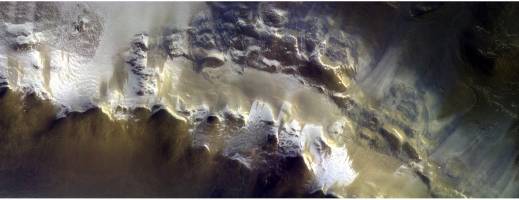
The Mars camera CaSSIS on the ExoMars Trace Gas Orbiter has returned its first colour images of the red planet.
Life Sciences - 23.04.2018
Dicer is not rolling dice
Researchers keep discovering new functions of small RNAs. For instance, they can be used as a defense mechanism against viruses or self-replicating genome invaders. These tiny pieces of RNA are often produced by a cleavage of long precursors by so called Dicer proteins. To their surprise, researchers from the University of Bern have found that some Dicers acquired a unique and as yet unknown feature that allow them to cleave the RNA precursors in a very specific way, resulting in small RNAs that work much more efficiently.
Health - Social Sciences - 11.04.2018
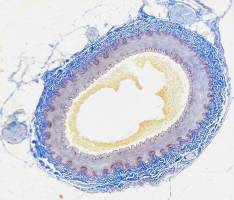
Tobacco smoking, but not marijuana use over time, was associated with plaque build-up in heart arteries in a study that followed men and women for over 25 years, according to a study led by the University of Bern. "We knew the effect of tobacco smoke, but not of marijuana smoke on subclinical plaque build-up in heart arteries (a marker of future heart attacks).
Astronomy & Space - 05.04.2018
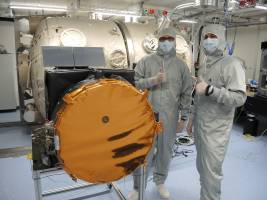
Construction of the space telescope CHEOPS is finished. The engineers from the Center for Space and Habitability (CSH) at the University of Bern will package the instrument this week and send it to Madrid, where it will be integrated on the satellite platform.
Environment - Earth Sciences - 14.03.2018
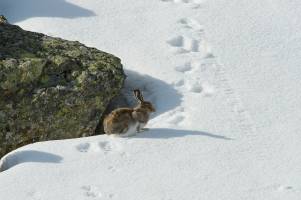
A warming climate will shrink and fragment mountain hare habitat in the Swiss Alps. Populations are likely to decline as a result, concludes an international study led by the University of Bern and the Swiss Federal Institute for Forest, Snow and Landscape Research (WSL). Specialised species like the mountain hare, adapted to life at high altitudes, are particularly affected by climate change.
Environment - Life Sciences - 06.03.2018
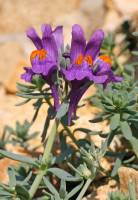
Rare plant species suffer more from disease than commoner species. The fact that rare species are more susceptible to attack by micro-organisms living in the soil, such as fungi and bacteria, may in fact be one of the reasons they are rare. Biologists have been trying to work out why some species are rare, while others are common, since Darwin's time and a new study from researchers at the University of Bern provides a possible answer.
Astronomy & Space - 05.03.2018
Comet "Chury’s" late birth
Comets which consist of two parts, like Chury, can form after a catastrophic collision of larger bodies. Such collisions may have taken place in a later phase of our solar system, which suggests that Chury can be much younger than previously assumed. This is shown through computer simulations by an international research group with the participation of the University of Bern.
Life Sciences - Pharmacology - 22.02.2018
Multi laboratory studies improve reproducibility of animal research
Pre-clinical animal research is typically based on single laboratory studies conducted under highly standardized conditions, a practice that is universally encouraged in animal science courses and textbooks. In a new study in PLOS Biology, researchers from the Universities of Bern and Edinburgh demonstrate that such insistence on uniformity risks producing results that are only valid under very specific conditions.
Pharmacology - Health - 22.02.2018
Evidence on the advantages and acceptability of antidepressants
An international study co-led by the University of Bern offers important insights from a synthesis of 522 clinical studies. The results show differences in efficacy of the 21 most commonly used antidepressants worldwide. Major depressive disorder is one of the most common, burdensome, and costly psychiatric disorders worldwide in adults.
Life Sciences - Health - 21.02.2018
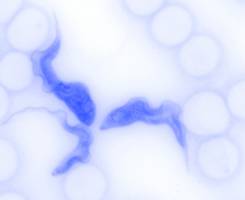
Trypanosomes are single-celled parasites that cause diseases such as human African sleeping sickness and Nagana in animals. But they are also used in basic research as a model system to study fundamental biological questions. Researchers of the University of Bern have now investigated how trypanosomes equally distribute their 'power plant' to the daughter cells during cell division.
Astronomy & Space - Environment - 05.02.2018
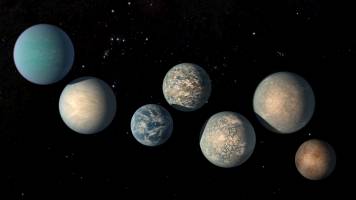
Researchers at the University of Bern are providing the most precise calculations so far of the masses of the seven planets around the star TRAPPIST-1. From this, new findings are emerging about their density and composition: All TRAPPIST-1 planets consist primarily of rock and contain up to five percent water.
Health - Life Sciences - 25.01.2018
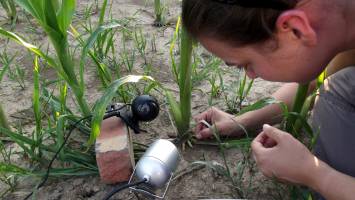
Research at the University of Bern is being intensified: Networking projects from different subject areas are being supported with three new Interfaculty Research Cooperations IRC. The projects deal with the health of environment, animals and humans, with religious conflicts and with sleep. The University of Bern strikes a new path in research funding: With the Interfaculty Research Cooperations IRC, it is launching networking projects, each of which involves 8 to 13 research groups from different faculties and which are being specifically funded.
History & Archeology - 11.01.2018
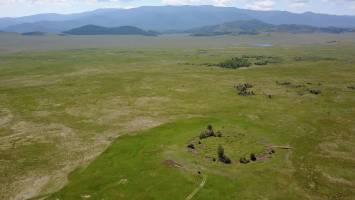
Deep in a swamp in the Russian republic of Tuva, SNSF-funded archaeologist Gino Caspari has discovered an undisturbed Scythian burial mound. All the evidence suggests that this is not only the largest Scythian princely tomb in South Siberia, but also the earliest - and that it may be harbouring some outstandingly well-preserved treasures.


Event - Mar 17
CEA Leti to Showcase Integrated Expertise In Microelectronics Reliability at IRPS 2026
CEA Leti to Showcase Integrated Expertise In Microelectronics Reliability at IRPS 2026
Health - Mar 17
AI was supposed to ease doctors' workload - instead they spend hours correcting errors
AI was supposed to ease doctors' workload - instead they spend hours correcting errors
Pharmacology - Mar 17
International trial finds rapid diagnostic testing alone does not reduce antibiotic prescribing for respiratory infections
International trial finds rapid diagnostic testing alone does not reduce antibiotic prescribing for respiratory infections
Social Sciences - Mar 17
Social background shapes how hard children work, according to a study by UC3M
Social background shapes how hard children work, according to a study by UC3M
Innovation - Mar 17
With Robotics Innovation Center, CMU and Hazelwood Partners Sustain Community Collaborations
With Robotics Innovation Center, CMU and Hazelwood Partners Sustain Community Collaborations