

Environment - Mar 25
UCalgary expedition, with NASA, Canadian and European space agencies, sets out to better understand state of Arctic ice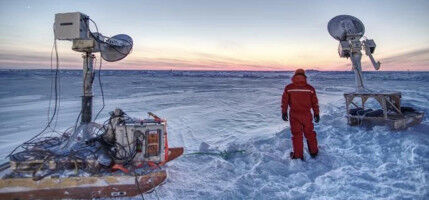
UCalgary expedition, with NASA, Canadian and European space agencies, sets out to better understand state of Arctic ice
Social Sciences - Today
Young people's wellbeing is improving in Greater Manchester, major survey finds
Young people's wellbeing is improving in Greater Manchester, major survey finds
Environment - Today
Australia's environment is improving but climate change is 'accelerating' damage to ecosystems and wildlife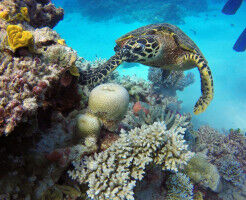
Australia's environment is improving but climate change is 'accelerating' damage to ecosystems and wildlife

Psychology - Mar 23
The grief myth: it doesn't come in stages or follow a checklist - like love, it endures
The grief myth: it doesn't come in stages or follow a checklist - like love, it endures

History & Archeology - Mar 23
The UV has played a part in the discovery of a 3,500-year-old loom that sheds light on key aspects of the Bronze Age textile revolution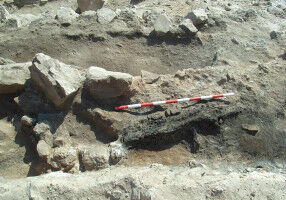
The UV has played a part in the discovery of a 3,500-year-old loom that sheds light on key aspects of the Bronze Age textile revolution
Innovation - Mar 23
The University of Valencia launches ClioViz, an open digital platform for accessing cultural heritage data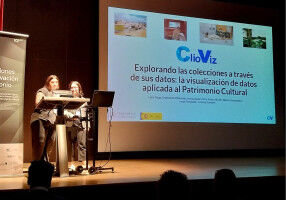
The University of Valencia launches ClioViz, an open digital platform for accessing cultural heritage data

Social Sciences - Mar 23
Study links higher concentration of pokie machines to increase in family and domestic violence
Study links higher concentration of pokie machines to increase in family and domestic violence
Health - Mar 23
Screening blitz could achieve cervical cancer elimination among Indigenous communities within a generation
Screening blitz could achieve cervical cancer elimination among Indigenous communities within a generation
Computer Science - Mar 20
New computer chip material inspired by the human brain could slash AI energy use
New computer chip material inspired by the human brain could slash AI energy use
news
Centre national de la recherche scientifique (CNRS)
Results 341 - 360 of 477.
Life Sciences - 20.10.2017
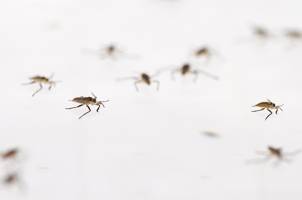
How do new species arise and diversify in nature? Natural selection offers an explanation, but the genetic and environmental conditions behind this mechanism are still poorly understood. A team led by Abderrahman Khila—CNRS Senior Researcher at the Institute of Functional Genomics of Lyon (CNRS / ENS de Lyon / Claude Bernard Lyon 1 University), or IGFL—has just figured out how water striders (family Veliidae) of the genus Rhagovelia developed fan-like structures at the tips of their legs.
Chemistry - 17.10.2017
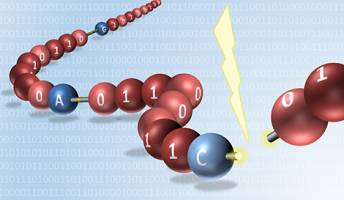
For the first time ever, using mass spectrometry, researchers have successfully read several bytes 1 of data recorded on a molecular scale using synthetic polymers. Their work, conducted under the aegis of the Institut Charles Sadron (CNRS) in Strasbourg and the Institute of Radical Chemistry (CNRS / Aix-Marseille University), sets a new benchmark for the amount of data—stored as a sequence of molecular units (monomers)—that may be read using this routine method.
Astronomy & Space - Physics - 16.10.2017
Gravitational waves shed first light on mergers of neutron stars
This is a major breakthrough in more than one respect. The scientists of the LIGO-Virgo Collaboration (which includes the CNRS) have for the first time observed the gravitational waves emitted by the merger of two neutron stars, rather than of two black holes as in previous cases. In another first, the light emitted from the source of gravitational waves was observed in the following hours, days and weeks, by 70 other groundand space-based observatories.
Life Sciences - Environment - 13.10.2017

Scientists from the BOREA Biology of Aquatic Organisms and Ecosystems research unit (CNRS / MNHN / IRD / UPMC / University of Caen / Université des Antilles)—together with a colleague from the Max Planck Institute for Terrestrial Microbiology in Marburg, Germany—have shown that Parisian street gutters are oases of microscopic life, home to microalgae, fungi, sponges, and mollusks.
Astronomy & Space - 13.10.2017
New developments in gravitational astronomy
Press conference (French only) Monday 16 October 2017 at 4 p.m. At the CNRS headquarters - 3 rue Michel-Ange – Paris 16e Researchers representing the LIGO-Virgo Collaboration, of which
Health - Computer Science - 13.10.2017

A team of researchers in the GIPSA-Lab (CNRS/Université Grenoble Alpes/Grenoble INP) and at INRIA Grenoble Rhône-Alpes has developed a system that can display the movements of our own tongues in real time.
Health - Environment - 10.10.2017

The bleaching of corals is a well-known consequence of climate change.
Health - Life Sciences - 09.10.2017
Type 1 diabetes and the microbiota : MAIT cells as biomarkers and new therapeutic targets
Together with colleagues from AP-HP Necker–Enfants Malades Hospital in Paris, scientists from the Cochin Institute (CNRS / INSERM / Paris Descartes University) have discovered that the onset of type 1 diabetes is preceded by modification of MAIT lymphocytes. These cells—associated with mucosae and able to recognize elements of the microbiota—could therefore serve as new biomarkers for early detection and prevention of the illness.
Chemistry - Physics - 09.10.2017

Known for their exceptional porosity that enables the trapping or transport of molecules, metal-organic frameworks (MOFs) take the form of a powder, which makes them difficult to format.
Computer Science - Mathematics - 29.09.2017

Tiling the plane with a single pattern is a mathematical problem that has interested humans since Antiquity, notably for the aesthetic quality of tiles in mosaics or tiling. One of the unresolved problems in this field that has been puzzling the scientific community since 1918 has now been definitively resolved thanks to Michaël Rao of the Laboratoire d'informatique du parallélisme (CNRS/Inria/ENS de Lyon/Université Claude Bernard Lyon 1).
Astronomy & Space - Physics - 27.09.2017

Scientists in the LIGO and Virgo collaborations have achieved the first ever three-detector observation of the gravitational waves emitted by the merger of two black holes.
Astronomy & Space - 25.09.2017
MATISSE to shed light on the formation of Earth and planets
The MATISSE instrument is ready to be sent to Chile, where in the next few weeks it will be installed on the Very Large Telescope (VLT), the world's most powerful astronomical observatory.
Physics - Astronomy & Space - 22.09.2017

A 50-year-old debate has at last been settled: the highest-energy cosmic rays do not originate in our own Galaxy but in galaxies located tens or even hundreds of millions of light years away.
Life Sciences - 13.09.2017

Researchers in Bordeaux recently discovered a new mechanism for storing information in synapses and a means of controlling the storage process. The breakthrough moves science closer to unveiling the mystery of the molecular mechanisms of memory and learning processes. The research, carried out primarily by researchers at the Interdisciplinary Institute for Neurosciences (CNRS/Université de Bordeaux) and the Bordeaux Imaging Center (CNRS/Université de Bordeaux/Inserm) 1 , appears in the 13 september 2017 edition of Nature .
Physics - Life Sciences - 12.09.2017

By incorporating magnetic nanoparticles in cells and developing a system using miniaturized magnets, researchers at the Laboratoire Matière et Systèmes Complexes (CNRS/Université Paris Diderot), in c
Health - Life Sciences - 08.09.2017

Cortisol is generally considered to be a stress hormone because its levels rise during episodes of acute stress. Yet its relationship to chronic stress is less clear. Researchers from the Éthologie Animale et Humaine laboratory (CNRS / Université de Rennes 1 /Université of Caen) and the Research Institute for Environmental and Occupational Health (INSERM /Université de Rennes 1), in collaboration with the University of Veterinary Medicine in Vienna, have linked lower cortisol levels to states of chronically poor welfare in adult horses observed under their usual living conditions.
Astronomy & Space - Chemistry - 04.09.2017
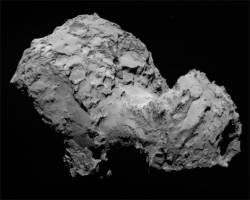
The Rosetta space probe discovered a large amount of organic material in the nucleus of comet “Chury. In an article published by MNRAS on August 31, 2017, two French researchers advance the theory that this matter has its origin in interstellar space and predates the birth of the Solar System. The ESA's Rosetta mission, which ended in September 2016, found that organic matter made up 40% (by mass) of the nucleus of comet 67P Churyumov-Gerasimenko, a.k.a.
Environment - Computer Science - 31.08.2017

Anyone who owns an Android smartphone will soon be able to contribute to a research project, simply by recording surrounding noise.
Life Sciences - Chemistry - 30.08.2017
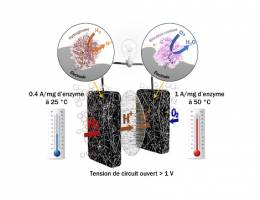
Making a biocell that is as effective as a platinum fuel cell: that's the feat that researchers in the Laboratoire de Bioénergétique et Ingénierie des Protéines (CNRS/Aix-Marseille Université) have a
Life Sciences - Health - 11.08.2017

The origin, development, and characteristics of two types of testicular macrophage have been described by a CNRS team at the Centre d'Immunologie de Marseille-Luminy (CNRS / INSERM / Aix-Marseille University). To elucidate the nature of these immune cells, the researchers used a novel cell tracing method.


Environment - Mar 25
UCalgary expedition, with NASA, Canadian and European space agencies, sets out to better understand state of Arctic ice
UCalgary expedition, with NASA, Canadian and European space agencies, sets out to better understand state of Arctic ice
Social Sciences - Today
Young people's wellbeing is improving in Greater Manchester, major survey finds
Young people's wellbeing is improving in Greater Manchester, major survey finds
Environment - Today
Australia's environment is improving but climate change is 'accelerating' damage to ecosystems and wildlife
Australia's environment is improving but climate change is 'accelerating' damage to ecosystems and wildlife
Psychology - Mar 23
The grief myth: it doesn't come in stages or follow a checklist - like love, it endures
The grief myth: it doesn't come in stages or follow a checklist - like love, it endures
History & Archeology - Mar 23
The UV has played a part in the discovery of a 3,500-year-old loom that sheds light on key aspects of the Bronze Age textile revolution
The UV has played a part in the discovery of a 3,500-year-old loom that sheds light on key aspects of the Bronze Age textile revolution
Innovation - Mar 23
The University of Valencia launches ClioViz, an open digital platform for accessing cultural heritage data
The University of Valencia launches ClioViz, an open digital platform for accessing cultural heritage data
Social Sciences - Mar 23
Study links higher concentration of pokie machines to increase in family and domestic violence
Study links higher concentration of pokie machines to increase in family and domestic violence
Health - Mar 23
Screening blitz could achieve cervical cancer elimination among Indigenous communities within a generation
Screening blitz could achieve cervical cancer elimination among Indigenous communities within a generation
Computer Science - Mar 20
New computer chip material inspired by the human brain could slash AI energy use
New computer chip material inspired by the human brain could slash AI energy use