


Event - Mar 17
CEA Leti to Showcase Integrated Expertise In Microelectronics Reliability at IRPS 2026
CEA Leti to Showcase Integrated Expertise In Microelectronics Reliability at IRPS 2026

Health - Mar 17
AI was supposed to ease doctors' workload - instead they spend hours correcting errors
AI was supposed to ease doctors' workload - instead they spend hours correcting errors


Pharmacology - Mar 17
International trial finds rapid diagnostic testing alone does not reduce antibiotic prescribing for respiratory infections
International trial finds rapid diagnostic testing alone does not reduce antibiotic prescribing for respiratory infections

Social Sciences - Mar 17
Social background shapes how hard children work, according to a study by UC3M
Social background shapes how hard children work, according to a study by UC3M
Innovation - Mar 17
With Robotics Innovation Center, CMU and Hazelwood Partners Sustain Community Collaborations
With Robotics Innovation Center, CMU and Hazelwood Partners Sustain Community Collaborations


news
University of Stuttgart
Results 21 - 39 of 39.
Physics - 05.11.2020

Future display technologies such as virtual and augmented reality require higher pixel resolutions and optical contrast. However, the potential of state-of-the-art displays is limited by the individual pixel size to achieve necessary resolution. Researchers at the University of Stuttgart have now succeeded to observe switching processes at previously unattained nanometer resolution.
Astronomy & Space - Chemistry - 26.10.2020
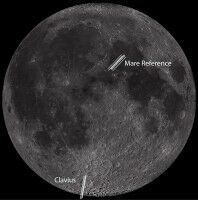
For the first time, the SOFIA (Stratospheric Observatory for Infrared Astronomy) flying observatory has provided direct and unambiguous evidence of water molecules on the moon beyond the permanent shadow at the poles. The infrared observatory, which is owned jointly by the US space agency NASA and the German Aerospace Center (DLR) was able to detect the molecules in the moon's southern hemisphere using the FORCAST (Faint Object InfraRed CAmera for the SOFIA-Telescope) instrument.
Environment - Physics - 15.09.2020
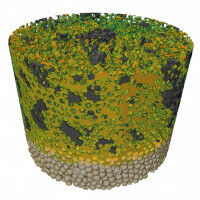
How pollutants spread in so-called partially saturated porous media - for example in sand or gravel - is difficult to compute due to the complex processes involved. A team led by Holger Steeb, Head of Research in the SimTech Cluster of Excellence as well as in the Collaborative Research Center 1313 of the University of Stuttgart, has now been able to visualize solute transport in the pore space using high-resolution synchrotron-based X-ray tomography.
Chemistry - Physics - 14.09.2020
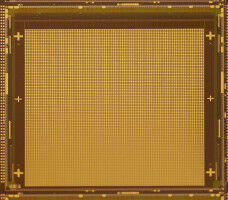
Scientists of the Micro, Nano and Molecular Systems Lab at the Max Planck Institute for Intelligent Systems and the Institute of Physical Chemistry at the University of Stuttgart have developed a digital chip that can be used to project movies with ultrasound. The researchers report on this in an article in the magazine "Nature Communications".
Physics - Campus - 11.09.2020

The overarching goal of the new Research Training Group "Towards Graduate Experts in Photonic Quantum Technologies" at the University of Stuttgart, which the German Research Foundation (DFG) approved for funding at its meeting on 6 November 2020, is to utilize the great potential of quantum physics for marketable applications.
Earth Sciences - Physics - 15.07.2020

Noise from wind turbines is a constant source of annoyance, despite compliance with emission control standards. But while some people feel heavily burdened by the noises, others hardly notice them. The Inter-Wind research project (Interdisciplinary Analysis and Mitigation Approaches - Residents' Experience of Acoustic and Seismic Wind Turbine Emissions), in which the University of Stuttgart is also involved, is investigating which factors interact in the noise pollution caused by wind turbines and which approaches for mitigation can be considered.
Life Sciences - Chemistry - 02.07.2020
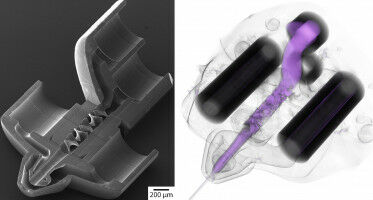
While miniaturization is already well advanced in electrical engineering, analysis and process technology in medicine and biochemistry still fills entire laboratories. Researchers from the University of Stuttgart and the Center for Free-Electron Laser Science (CFEL) in Hamburg have now developed a method which enables a laboratory to be reduced to the size of the tip of a needle.
Research Management - 05.06.2020

The use of touch screens is often difficult, especially for older people, since the information is captured primarily with the eye, but not with the sense of touch. Researchers at the Institute for Engineering Design and Industrial Design (IKTD) at the University of Stuttgart are now developing a technology that can be used to "feel" the information on the touch user interface by means of electrostatic fields.
Physics - 28.05.2020
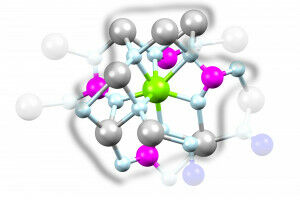
Crystals doped with rare-earths are currently used in batteries, LEDs, magnets, lasers, and much more. So far, the detection of single nuclear spins close-by a rare-earth electron spins was not feasible. Researchers at 3rd Institute of Physics, University of Stuttgart and colleagues from Beijing Computational Science Research Center now used the rare-earth cerium to measure individual silicon nuclear spins, located in the crystal lattice in close proximity to cerium.
Health - 18.05.2020
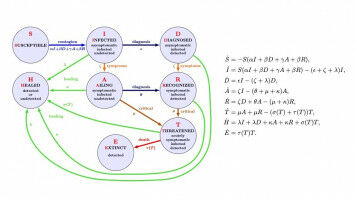
In order to keep the rate of new infections in the Covid-19 epidemic low and at the same time limit the negative consequences on social and economic life, protective measures should be adapted to the respective case numbers. But what restrictions are necessary, and which lockdown regulations can be relaxed? This is difficult to estimate due to the uncertain and dynamic data situation and the complexity of the spreading and the measures.
Life Sciences - Pharmacology - 29.04.2020
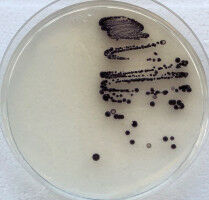
Multi-resistant germs can cause severe infections, particularly in people with a weakened immune system, and are difficult to treat with conventional antibiotics. Novel active substances with anti-infective and sometimes antibiotic effects such as violacein are promising candidates for a remedy, but it has so far been difficult to produce them in sufficient quantities.
Computer Science - Social Sciences - 28.04.2020

The University of Stuttgart will be the first European institution to join the AI Horizons Network of IBM in order to advance AI research on the interaction of language and knowledge as part of a multi-year cooperation. The AI Horizons Network is a global network of researchers and doctoral students founded by IBM to further develop the use of artificial intelligence, machine learning, natural language processing, and related technologies in a series of research projects and experiments.
Physics - Materials Science - 23.04.2020
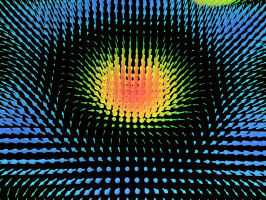
The destructive force of a tornado occurs due to the extremely high rotational speeds in its center, which is called "vortex". Surprisingly, similar effects as in such storms are predicted for light that travels along an atomically smooth gold surface. This light can exhibit angular momentum and vortices.
Physics - Electroengineering - 23.10.2019

The continuously growing need for higher data rates as well as globally available broadband internet requires innovative technology developments and the exploitation of a new electromagnetic spectrum. In the scope of R&D projects funded by the German Aerospace Center, researchers at the University of Stuttgart have developed a high-performance technology platform to exploit the frequency spectrum in the so-called E-band at 71-86 GHz.
Materials Science - 16.09.2019

Researchers from the University of Stuttgart, ETH Zurich and the Swiss Empa have presented a method with which wood panels themselves bend into a previously calculated shape in a controlled drying process without mechanical force. The procedure, which contributed to the production of the Urbach Tower at the Remstal Garden Show near Stuttgart, was reported on by the renowned scientific journal Science Advances in its issue of 13 September 2019.
Physics - 09.09.2019

A supersolid is a state of matter that can be described in simplified terms as being solid and liquid at the same time. In recent years, extensive efforts have been devoted to the detection of this exotic quantum matter. A research team led by Tilman Pfau and Tim Langen at the 5th Institute of Physics of the University of Stuttgart has succeeded in proving experimentally that the long-sought supersolid state of matter exists.
Life Sciences - Environment - 15.05.2019
Since the beginning of the year, 40 representatives from renowned research facilities in the Stuttgart region have been working together at the Biointelligence Competence Center to design the paradigm shift of Biological Transformation. The first Biointelligent Products and Production - the Sustainable Industrial Revolution conference took place on the 15 May, where the scientists from the "Biolintelligence Competence Center" submitted their appeal to politicians.
Mathematics - Linguistics & Literature - 14.05.2019

Nowadays, Digital Humanities is a booming subject, but it has a long history. "Quantitative Literary Studies" at the University of Stuttgart investigates how computational methods have been used for the analysis and interpretation of language and literature since the early 19th century. The German Research Foundation (DFG) has now approved the continuation of the project.
Physics - 08.05.2019
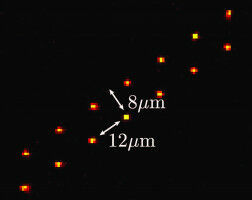
Researchers from the University of Stuttgart and from the Institut d'optique in Palaiseau have explored a unique state of matter, a so-called topological phase. Such a topologicial phase is the ground state of a quantum many-body system and exhibits unique properties.


Event - Mar 17
CEA Leti to Showcase Integrated Expertise In Microelectronics Reliability at IRPS 2026
CEA Leti to Showcase Integrated Expertise In Microelectronics Reliability at IRPS 2026
Health - Mar 17
AI was supposed to ease doctors' workload - instead they spend hours correcting errors
AI was supposed to ease doctors' workload - instead they spend hours correcting errors
Pharmacology - Mar 17
International trial finds rapid diagnostic testing alone does not reduce antibiotic prescribing for respiratory infections
International trial finds rapid diagnostic testing alone does not reduce antibiotic prescribing for respiratory infections
Social Sciences - Mar 17
Social background shapes how hard children work, according to a study by UC3M
Social background shapes how hard children work, according to a study by UC3M
Innovation - Mar 17
With Robotics Innovation Center, CMU and Hazelwood Partners Sustain Community Collaborations
With Robotics Innovation Center, CMU and Hazelwood Partners Sustain Community Collaborations